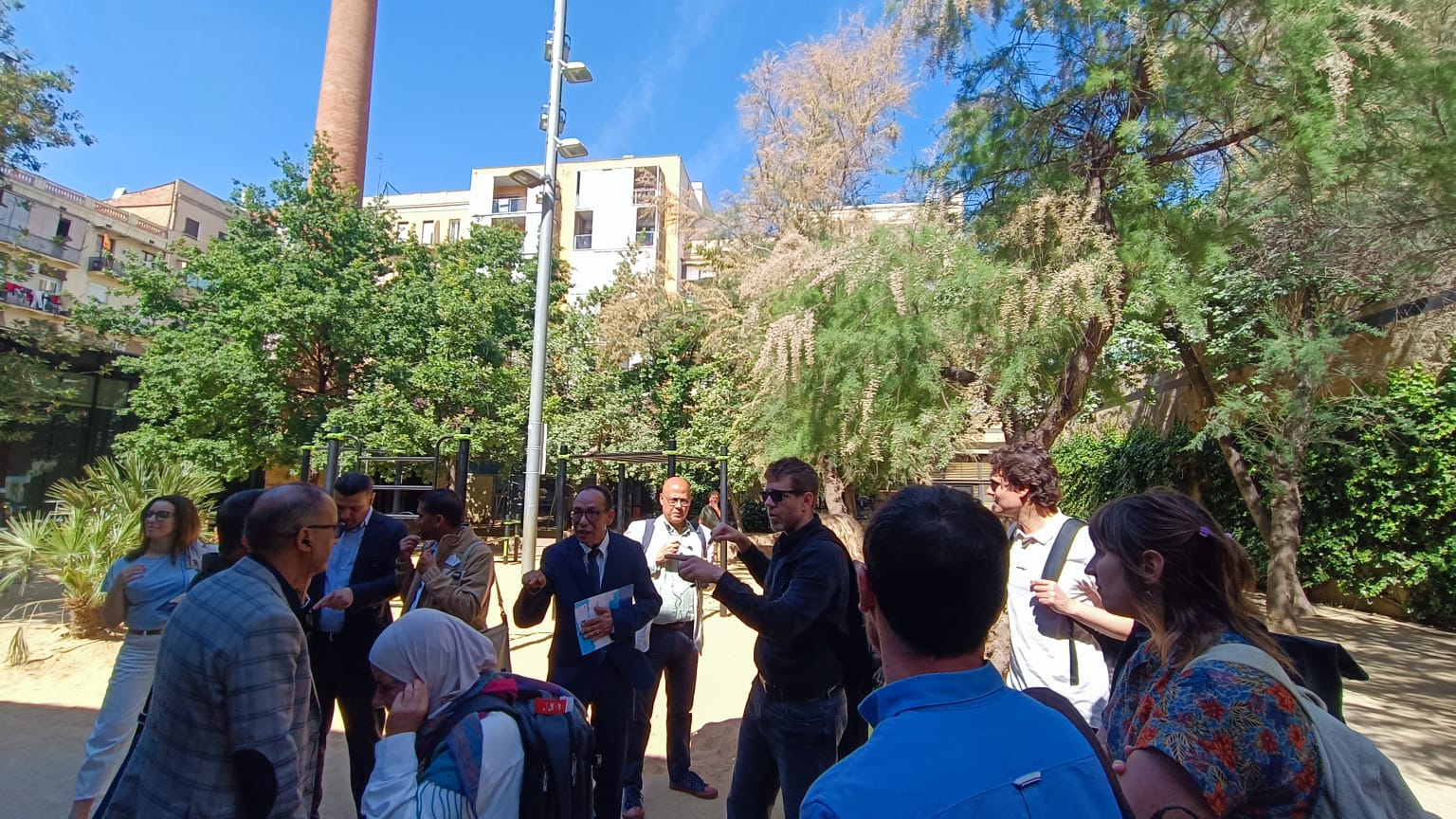
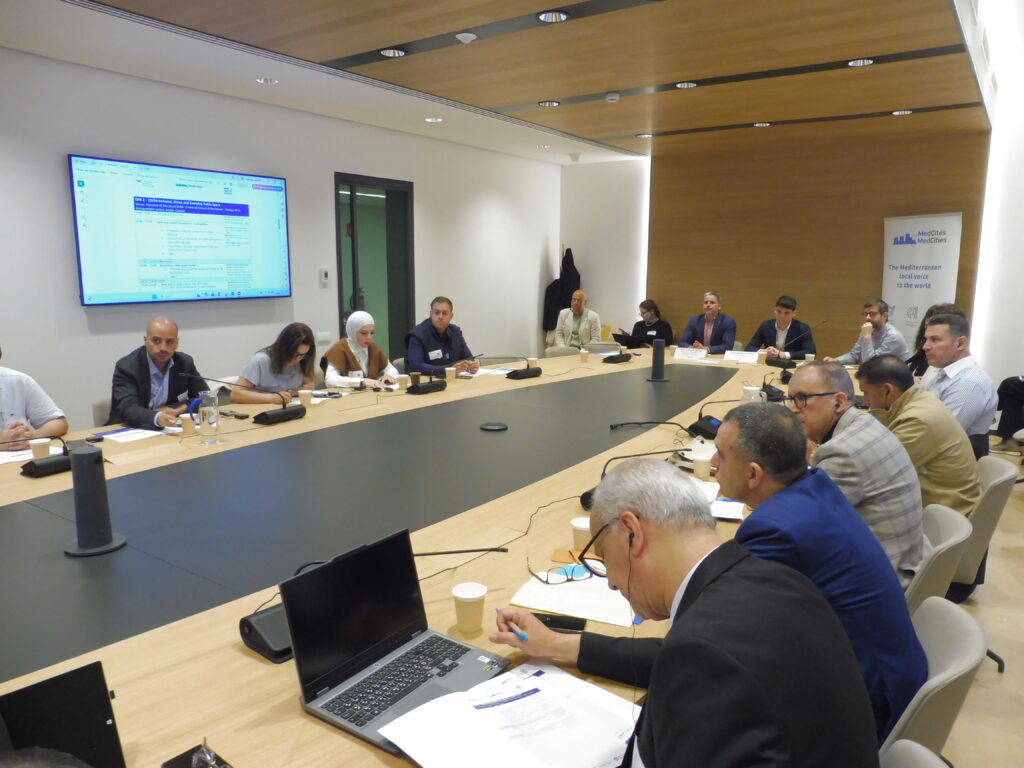
Local authorities from across the Mediterranean gathered in Barcelona for a three-day study visit aimed at strengthening capacities in gender-responsive urban planning and the renaturalisation of public spaces. Organised within the framework of the MELUP and NATURIncMed projects, the visit brought together political representatives and technical staff from cities including Tripoli, Tetouan, Gabès, Nablus, Al Hoceima, Zahle, Madaba, Al Karak, El Mina, and Agadir.
The exchange provided a platform for peer learning, combining institutional presentations from the Barcelona City Council, the Barcelona Provincial Council, and the Government of Catalonia with on-site visits to exemplary urban projects.
Integrating Gender into Urban Planning
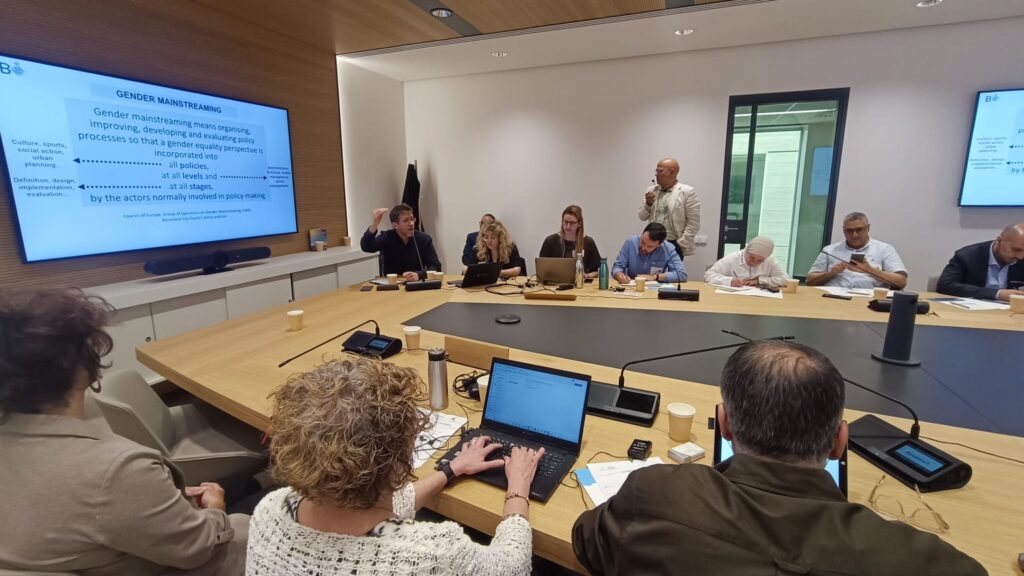
A central theme of the visit was the integration of gender perspectives into urban planning. The Barcelona City Council shared its experience in mainstreaming gender across municipal policies since 2015, highlighting the importance of designing public spaces that reflect diverse needs.
“Urban planning must consider how different people experience the city—depending on gender, age, or background,” explained Blai Martí, the Gender Equality Technician from the Barcelona City Council. The city’s methodology evaluates factors such as lighting, visibility, accessibility, and the diversity of uses in public spaces to ensure safety and inclusivity.
Participants explored concrete examples, including redesigned public spaces and facilities tailored to support women and vulnerable groups. These included police stations adapted to better assist victims of gender-based violence and public spaces designed to enhance perceived safety through visibility and activity.
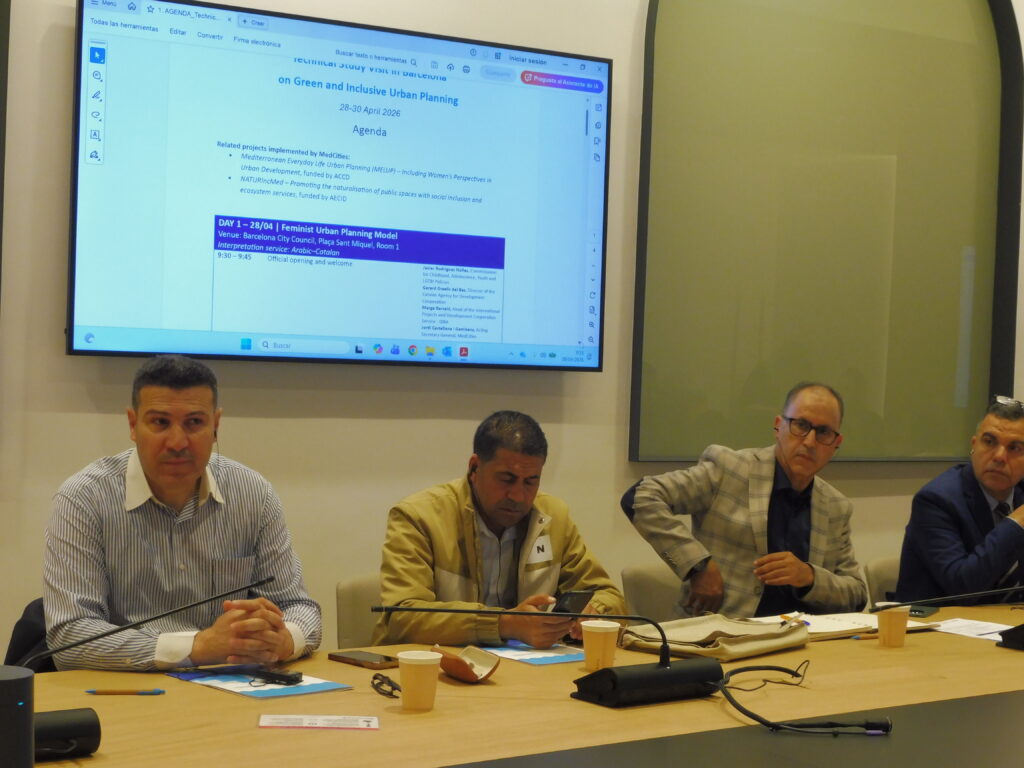
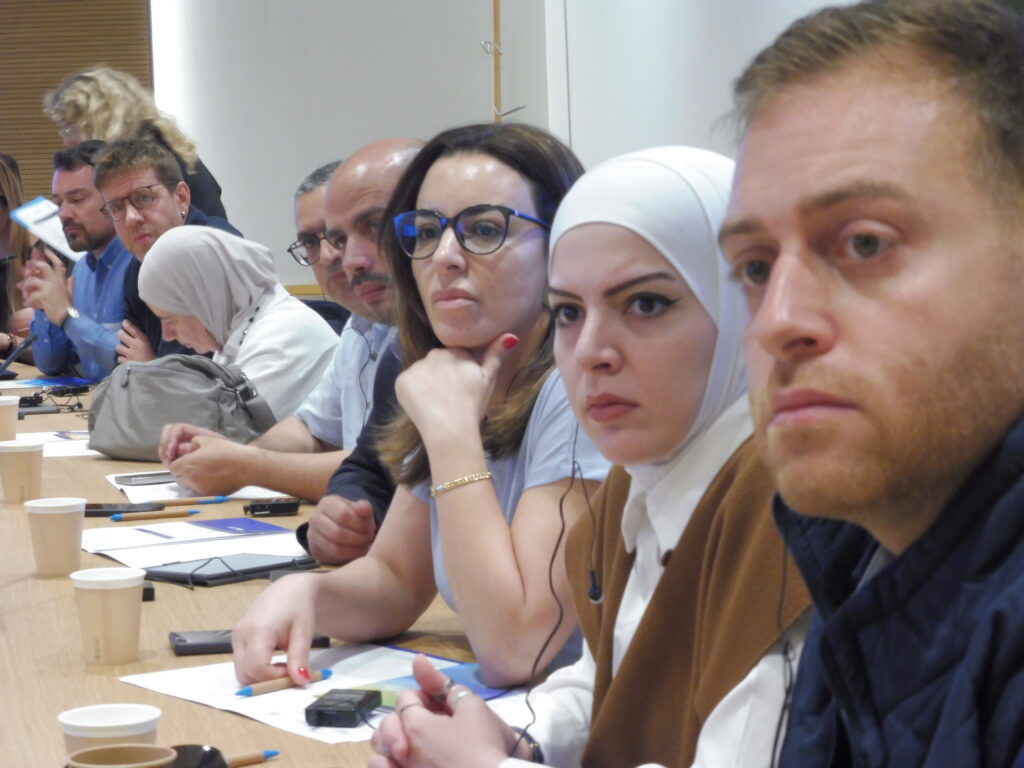
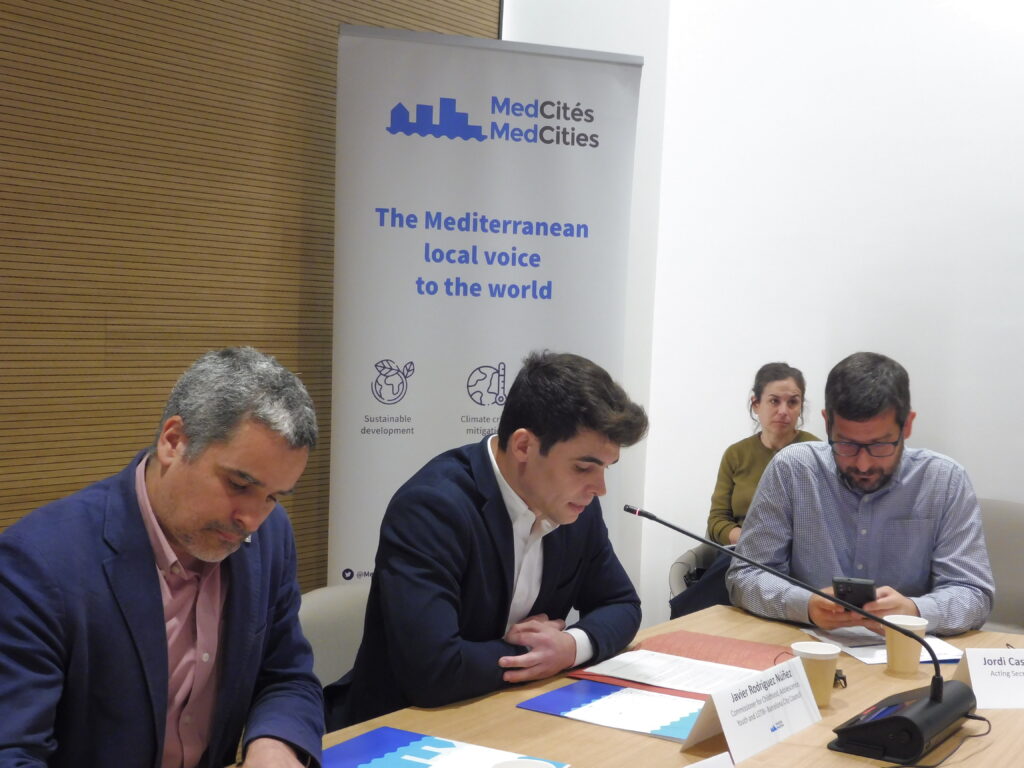
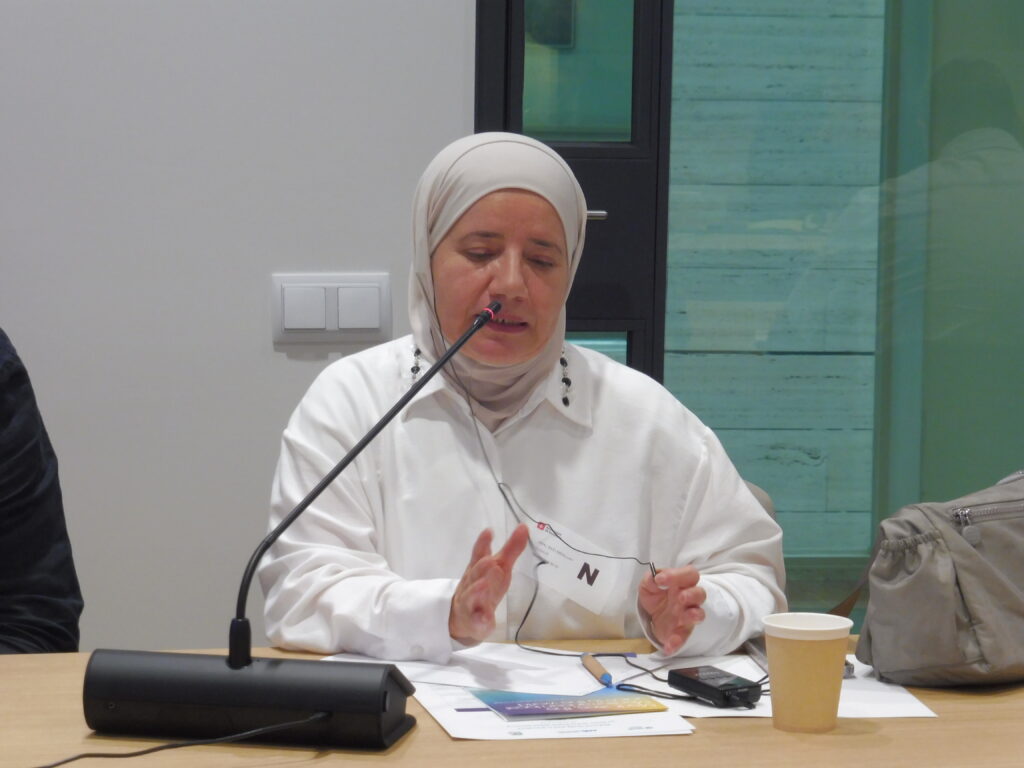
Cities shared their own challenges and progress. A representative from Tripoli noted: “We need more women in decision-making roles. Their perspectives are essential to understanding everyday challenges in our cities.” Similarly, the delegate from Nablus highlighted the importance of linking gender equality with access to basic services, particularly water management.
During the third day of the visit, Andrea Costafreda, Director General for Development Cooperation of the Government of Catalonia, stressed the importance of mainstreaming gender equality across public policies. “Gender policies must be present in all areas of life and play a central role in the political decisions of public administrations,” she underlined, while also highlighting the role of international cooperation networks in fostering more inclusive and equitable urban development across the Mediterranean.
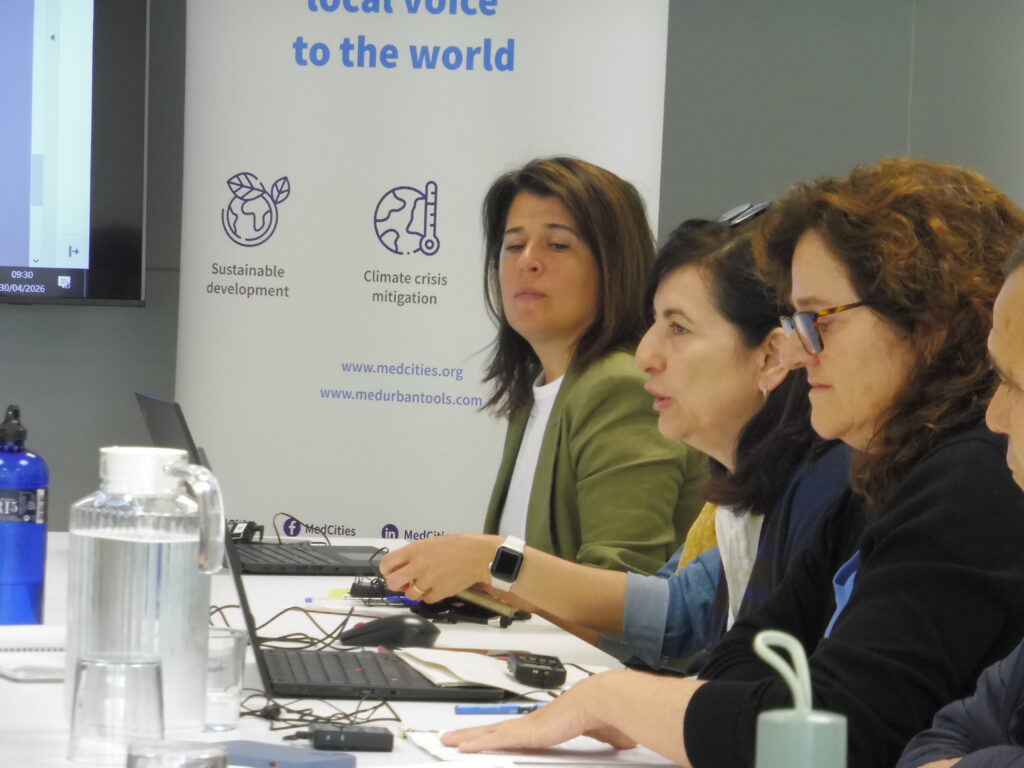
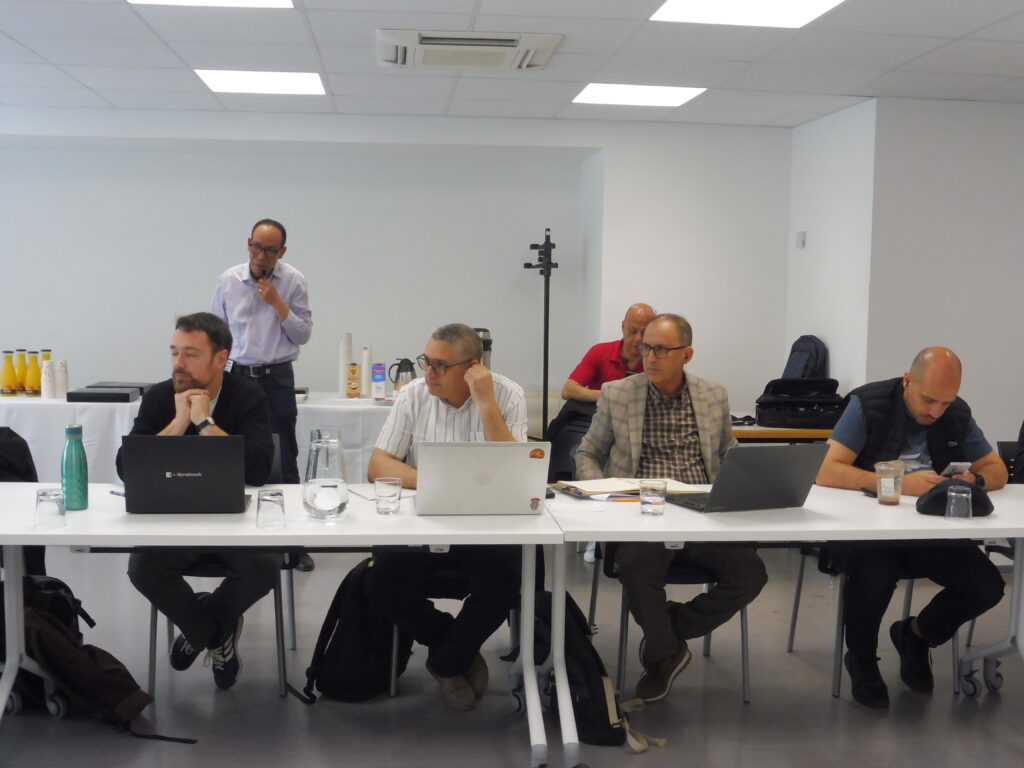
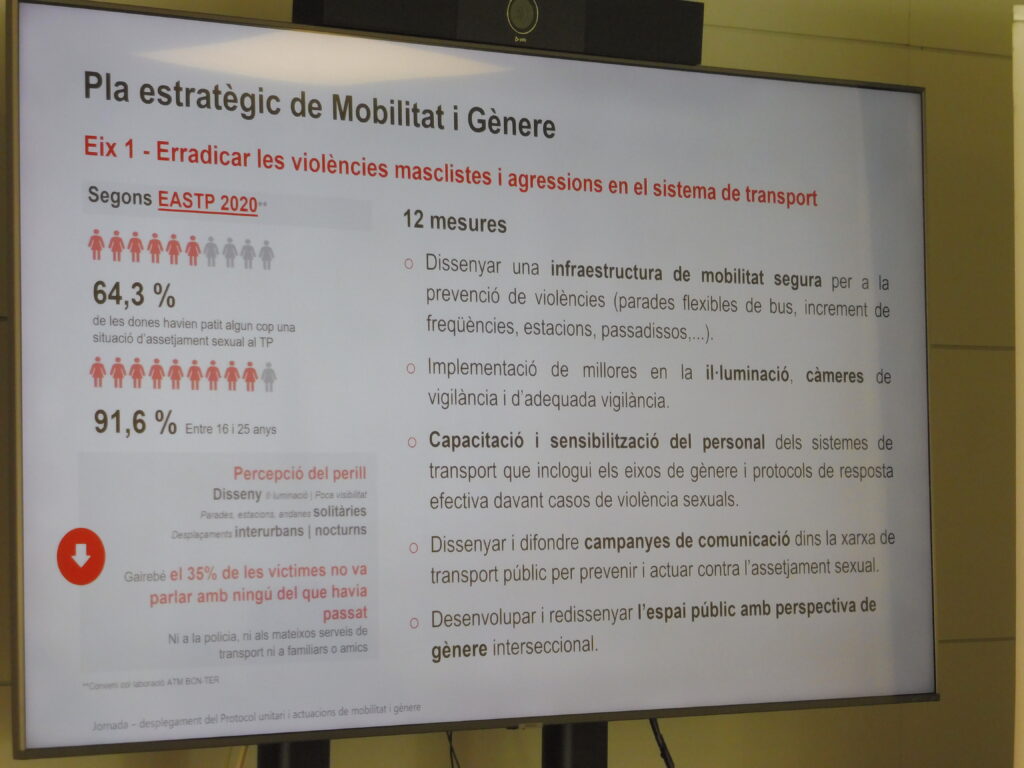
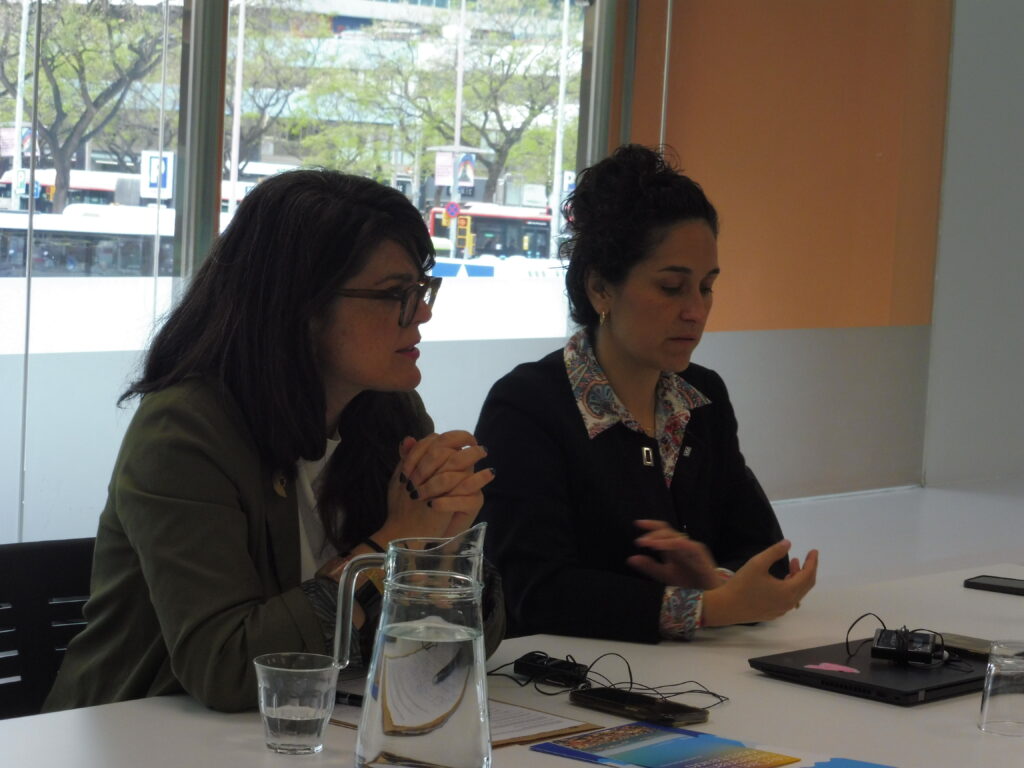
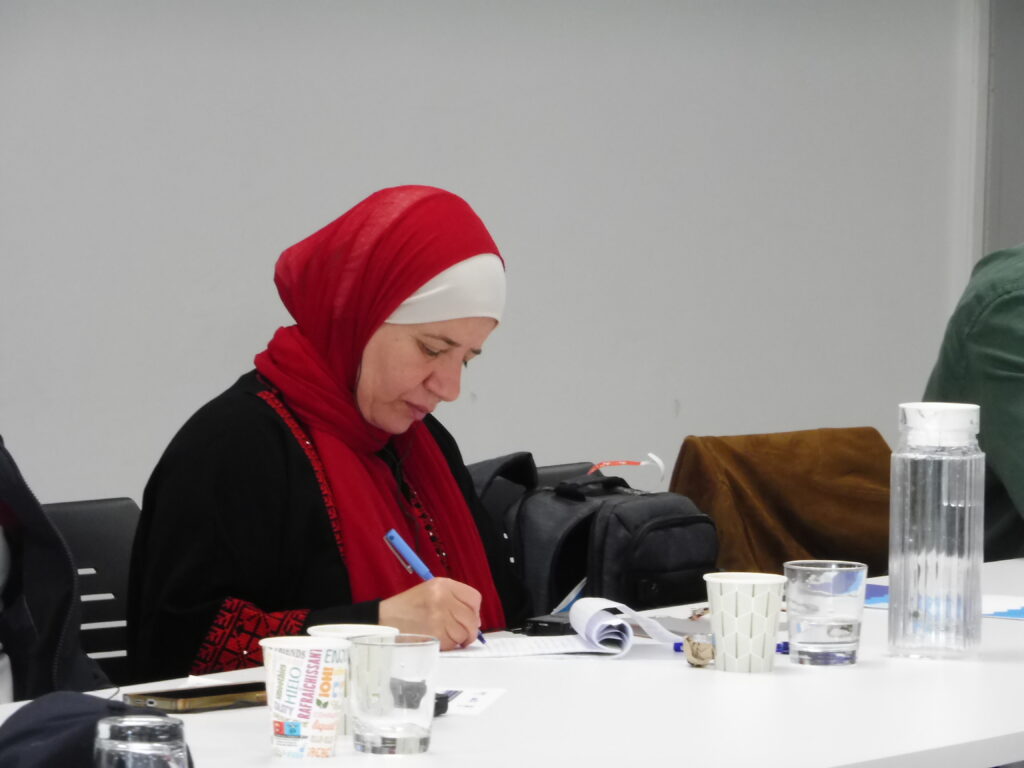
The Directorate General for Transport and Mobility from the Government of Catalonia presented the gender policies being implemented in public transportation, which focus on inclusive models and ways of getting around the region that take into account how women travel, since they make up the majority of public transportation users and often have dependents, such as infants or the elderly. Officials from transport and mobility explained some of the specific measures and pilot projects they plan to implement regarding bus route planning and other initiatives that help women feel safer when using various forms of public transportation.
Urban Green Planning and Climate Resilience
The renaturalisation of cities and the expansion of green infrastructure emerged as another key focus. Mediterranean cities are increasingly facing climate-related challenges, including rising temperatures, water scarcity, and environmental degradation.
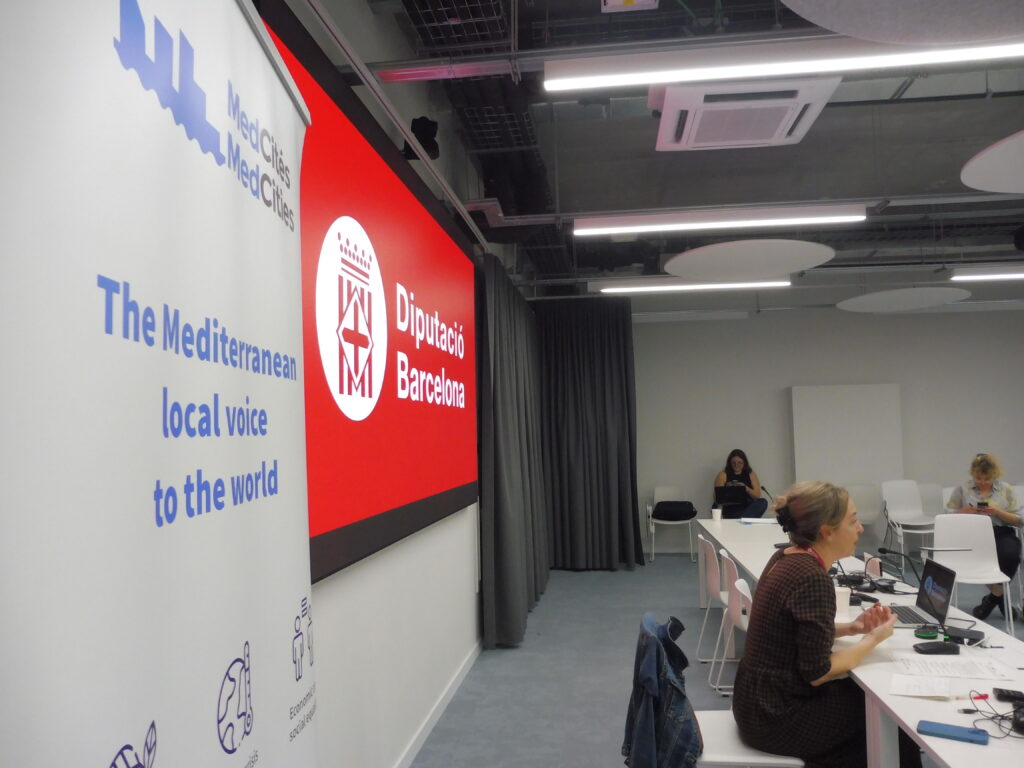
Barcelona City Council and the Barcelona Provincial Council (Diputació de Barcelona) presented strategic tools such as urban green master plans and nature-based solutions to improve climate resilience and public health. Green spaces were framed not only as environmental assets but also as social infrastructure that supports well-being and community life.
“We must rethink green spaces as living infrastructure that requires long-term planning and maintenance,” highlighted Marta Viada from the Equipment and Public Space Section of the Barcelona Provincial Council.
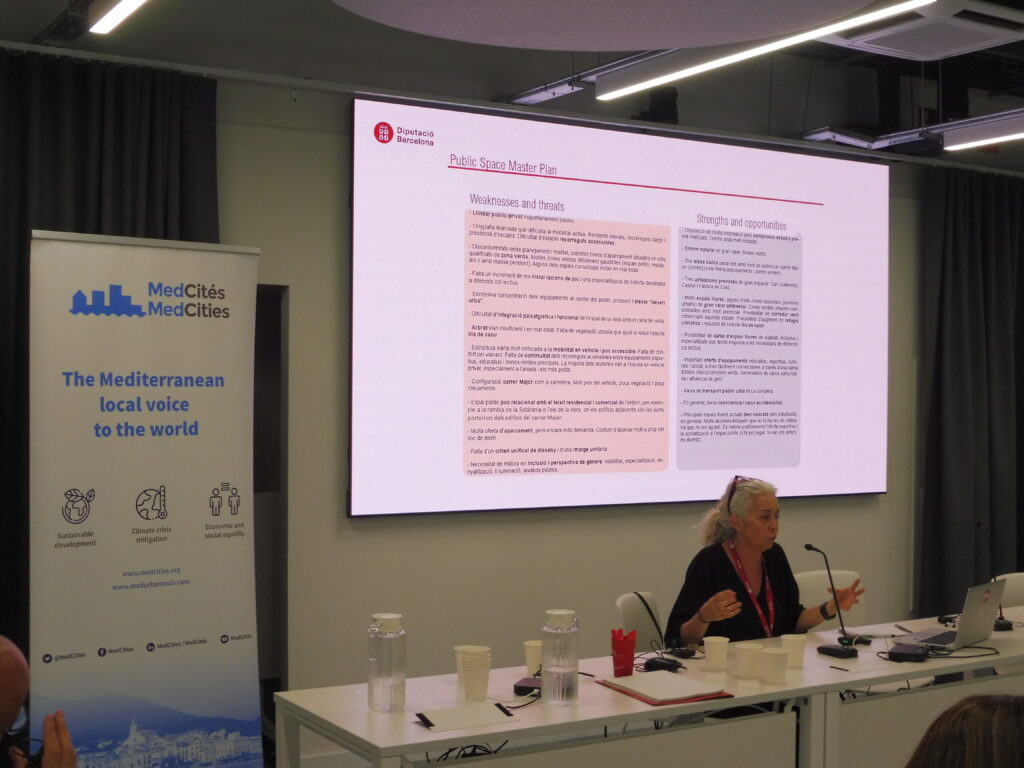
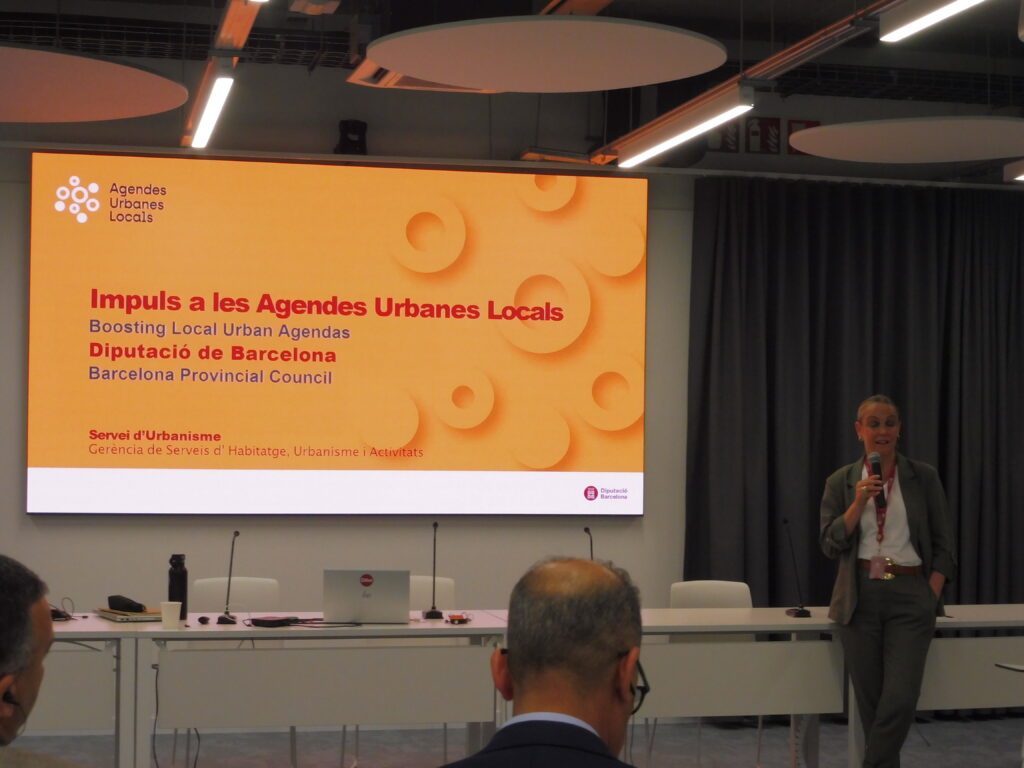
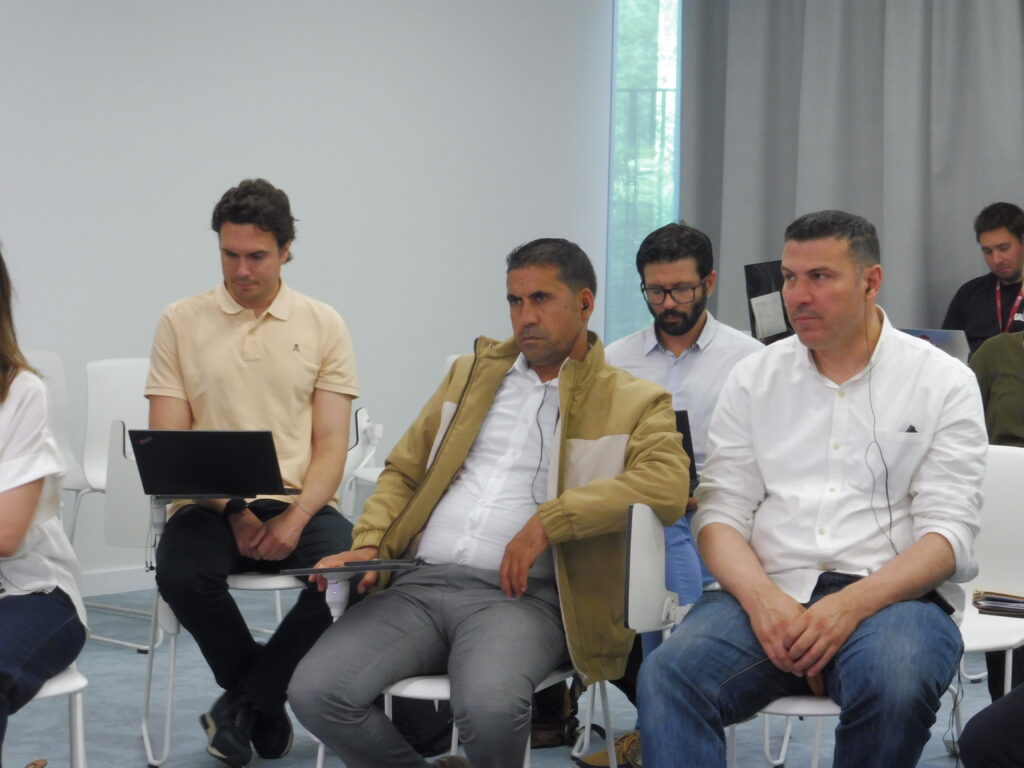
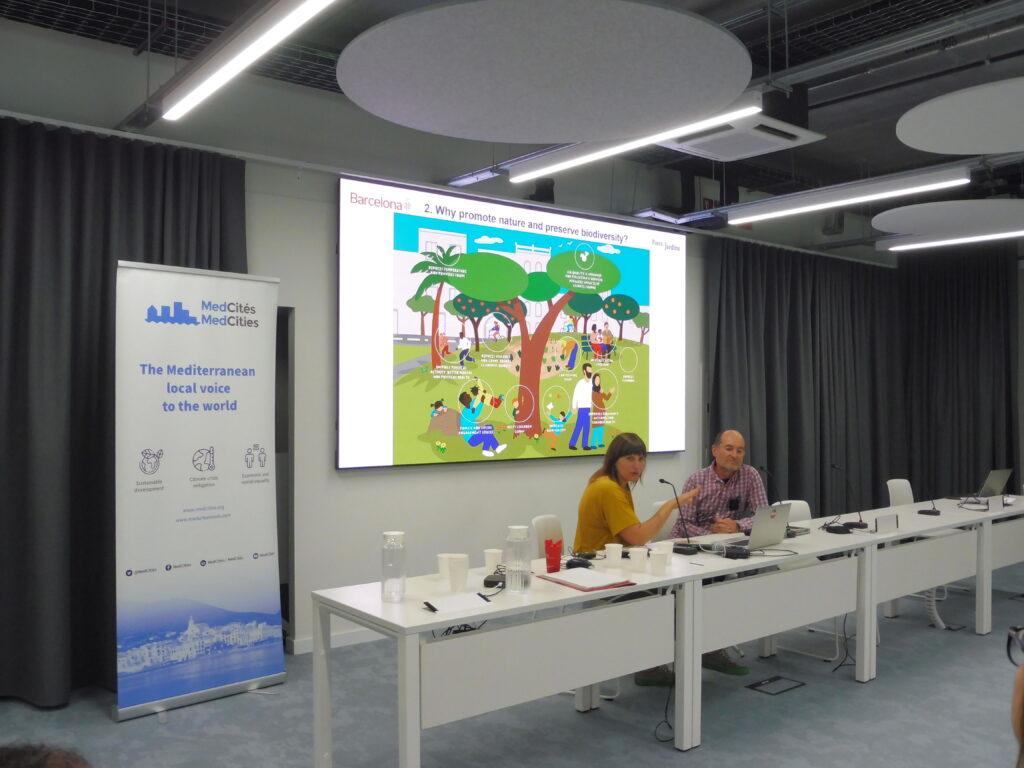
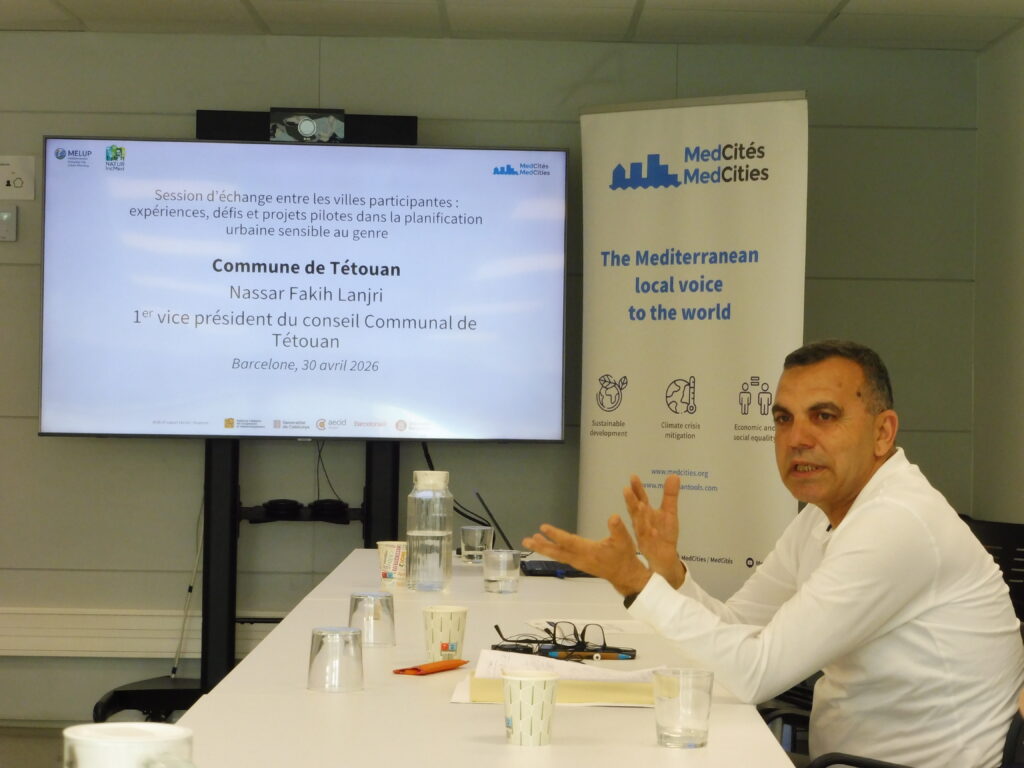
Participating cities shared diverse approaches. Tetouan outlined its climate plan and strategy to expand green areas while improving social well-being and energy efficiency. In El Mina, local authorities emphasised the urgency of developing a roadmap for green spaces in a coastal city highly exposed to climate change risks like flooding.
From Gabès, representatives pointed to the environmental challenges caused by industrial pollution, while Madaba highlighted efforts to integrate children and local communities into the design of new parks with shade to fight the heat island effect.
Participation and Local Governance
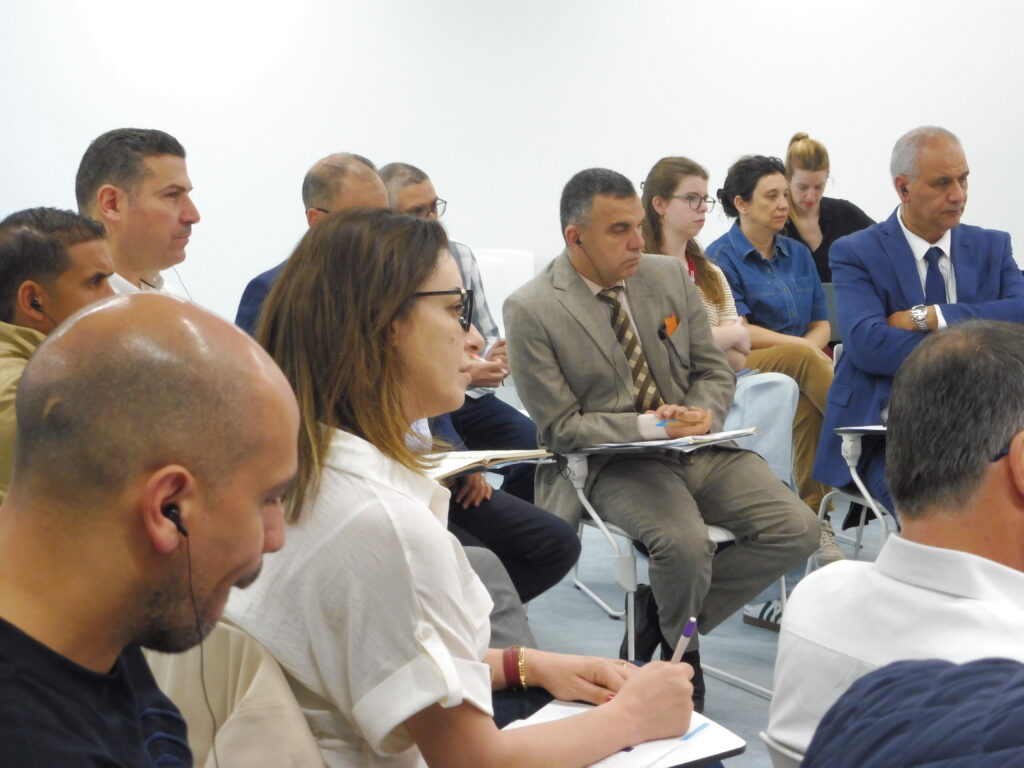
Citizen participation was identified as a crucial component of inclusive urban planning. Barcelona City Council showcased methodologies such as exploratory walks, community workshops, and participatory design processes involving diverse groups, including women, children, and elderly residents.
These approaches aim to better understand how public spaces are used in daily life and to incorporate local knowledge into planning decisions.
“Participation is essential, but it must happen at the right stage—especially during the planning phase,” noted one of the experts.
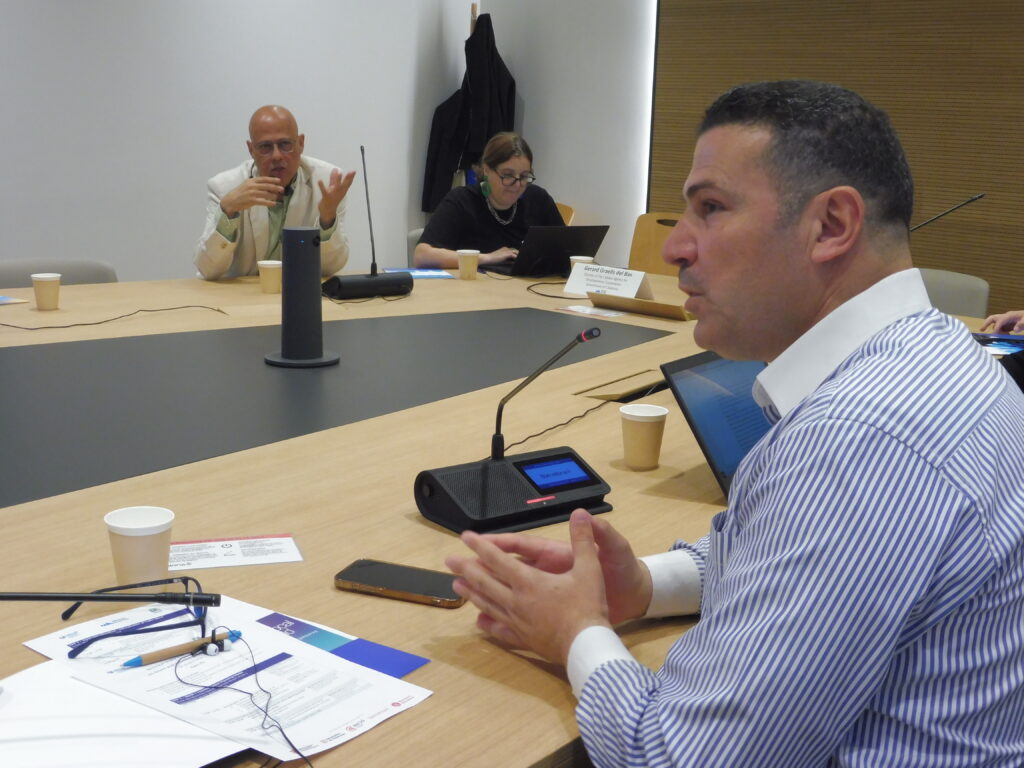
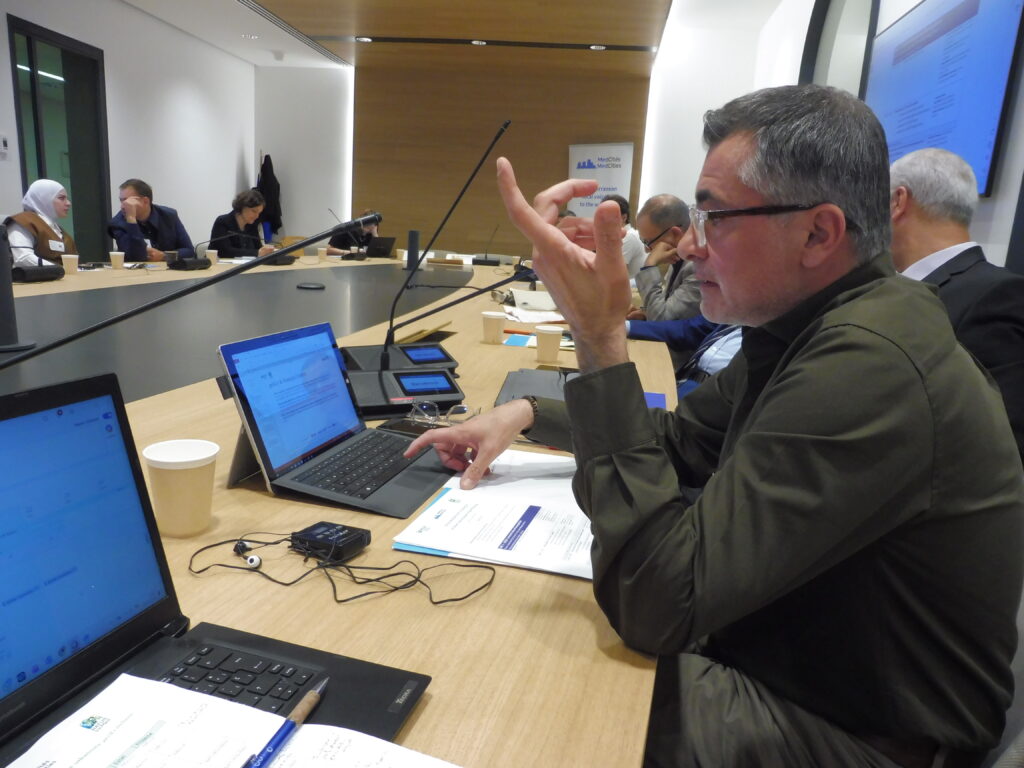
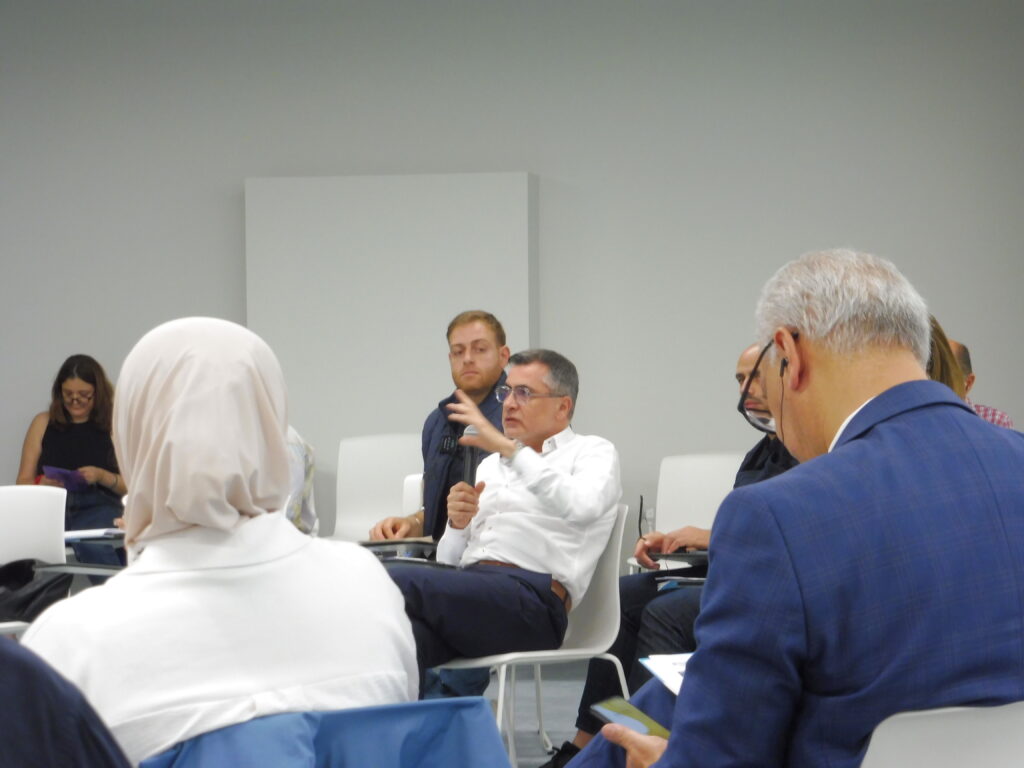
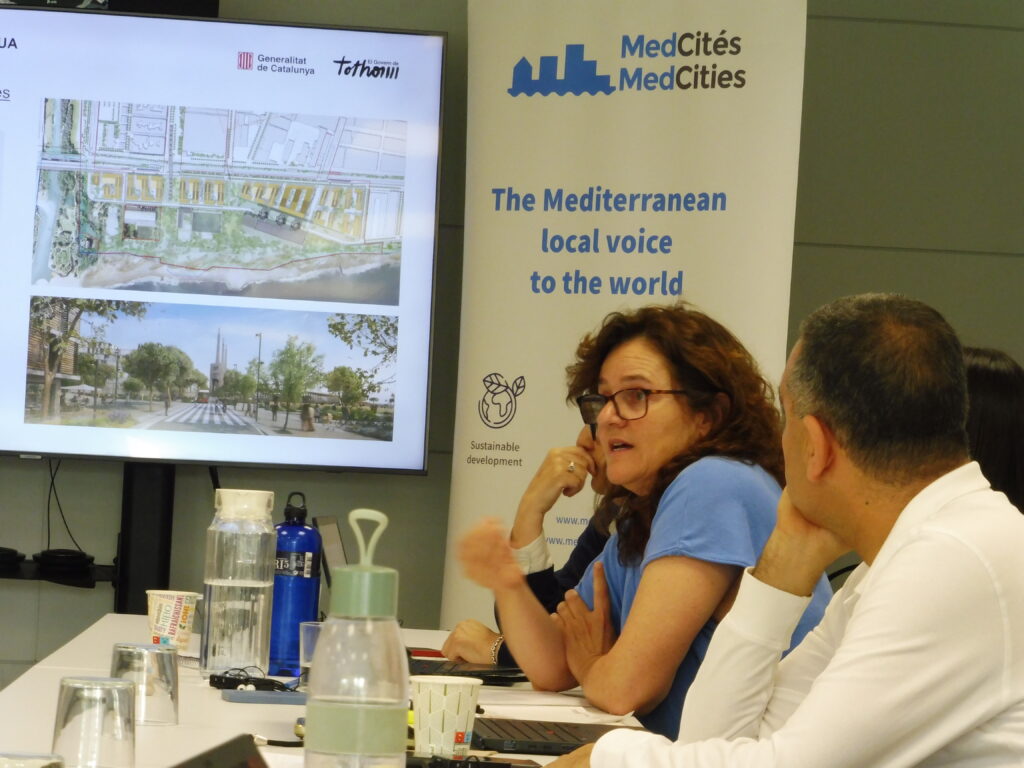
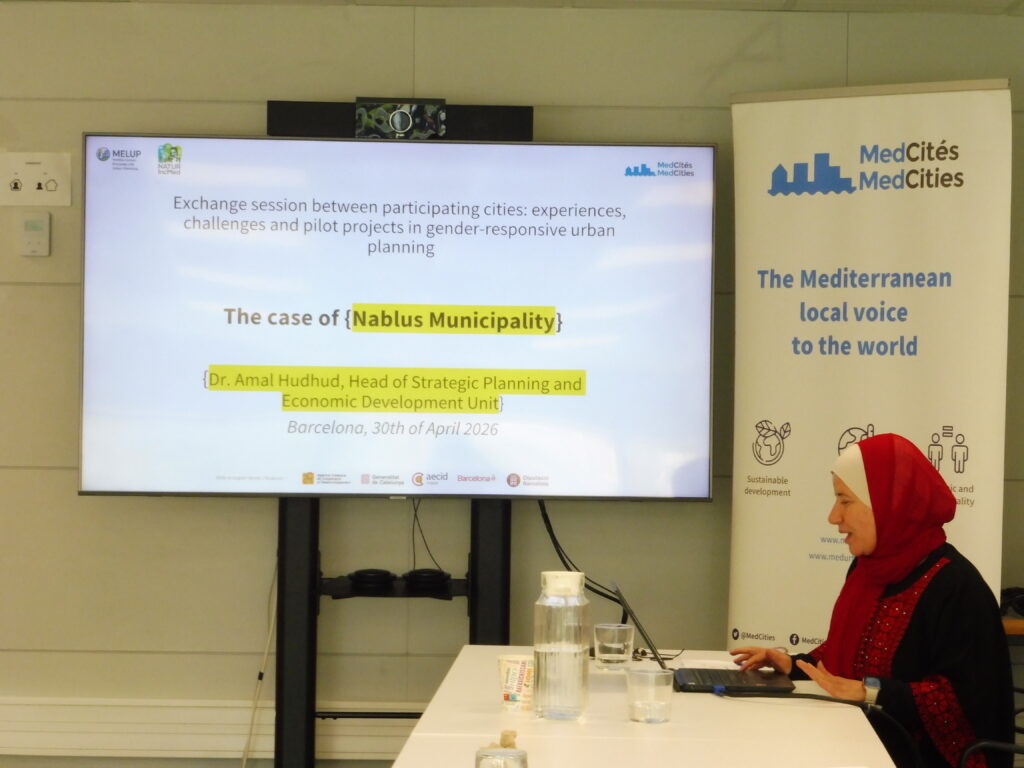
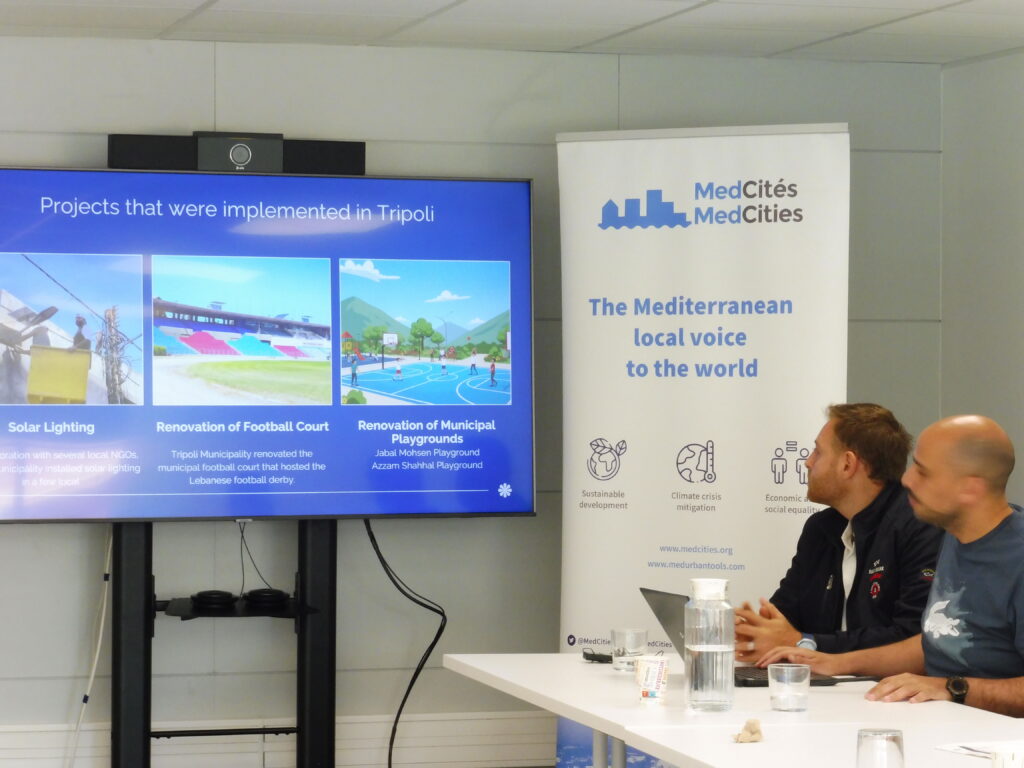
Several cities shared experiences of participatory processes. In Al Hoceima, local authorities described how workshops and exploratory walks with women helped identify key urban challenges and co-design solutions. Zahle and Tripoli also highlighted the importance of engaging communities despite limited resources and complex socio-political contexts.
From Strategy to Implementation: Learning on the Ground
Field visits across Barcelona and the metropolitan area allowed participants to observe how policies translate into practice. Sites included gender-sensitive public spaces, green corridors, and neighbourhood squares redesigned through participatory processes.
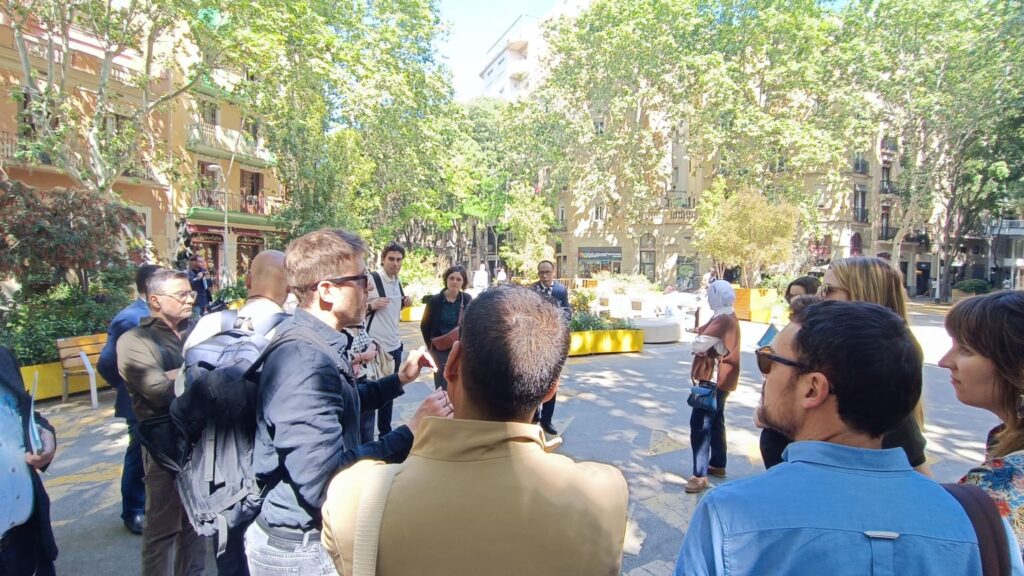
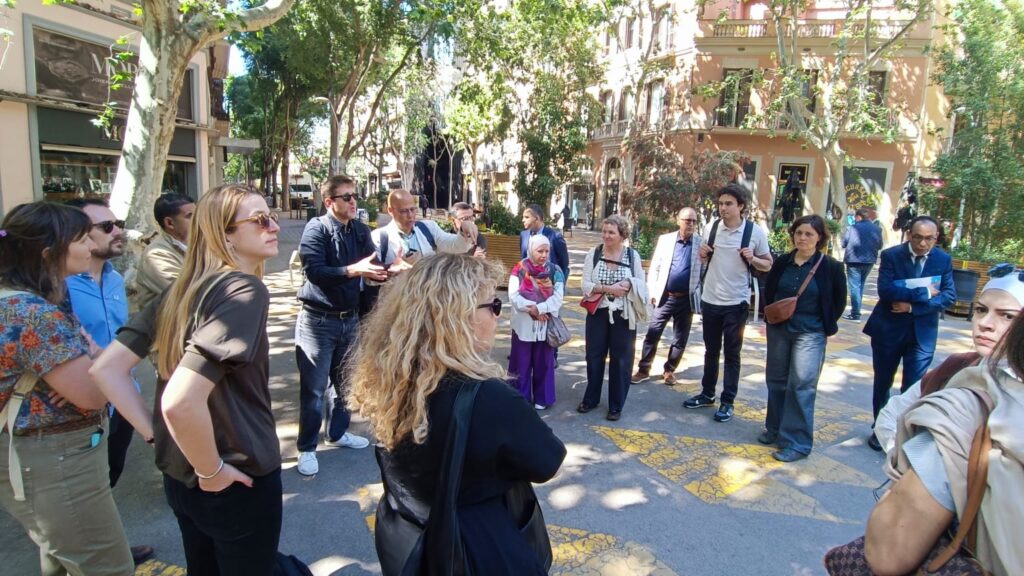
MELUP project participants visited several examples in the city centre, including school surroundings redesigned to provide safer and more comfortable spaces for families and children, particularly benefiting caregivers and women. The delegation also explored one of Barcelona’s “Superblocks”, an urban model that reclaims street space for people by reducing car traffic and introducing green areas, benches, and community spaces at street intersections. Participants additionally visited an interior courtyard featuring a public library with transparent façades designed to improve visibility and perceived safety, demonstrating how architectural design can contribute to more inclusive public spaces.
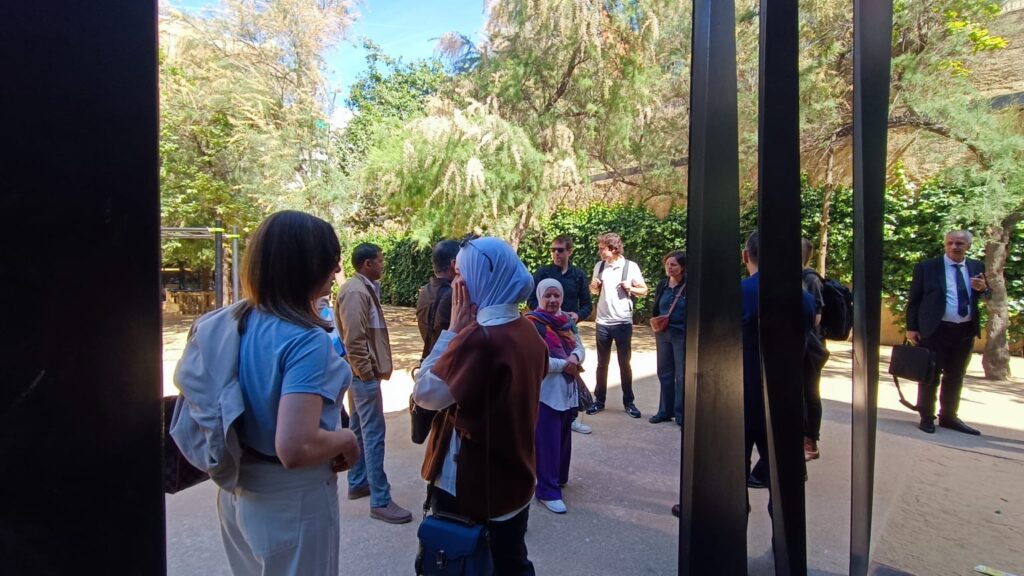
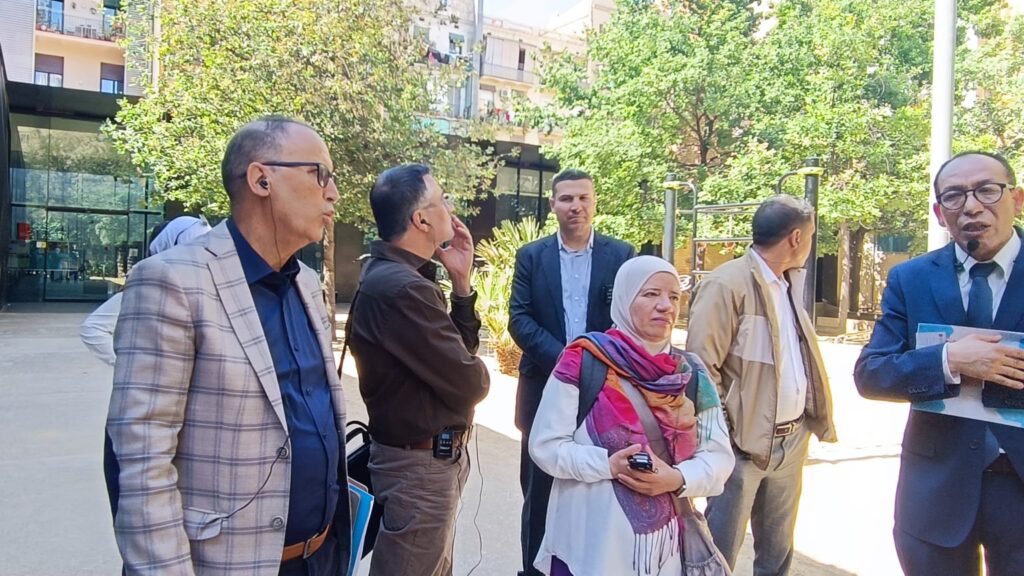
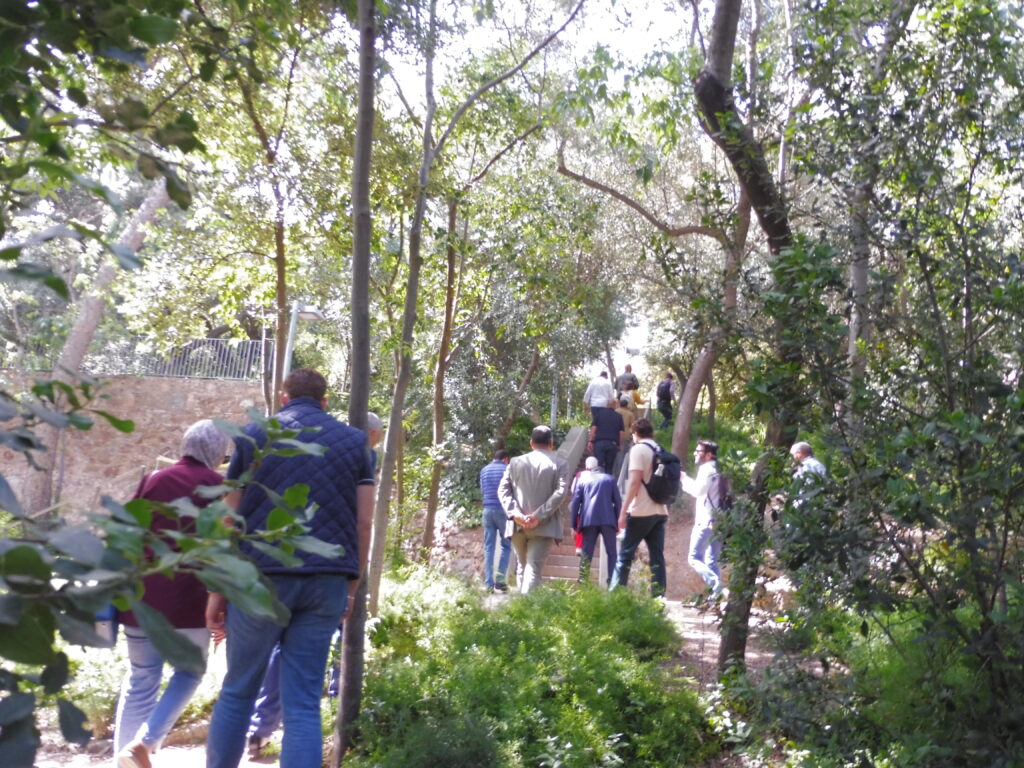
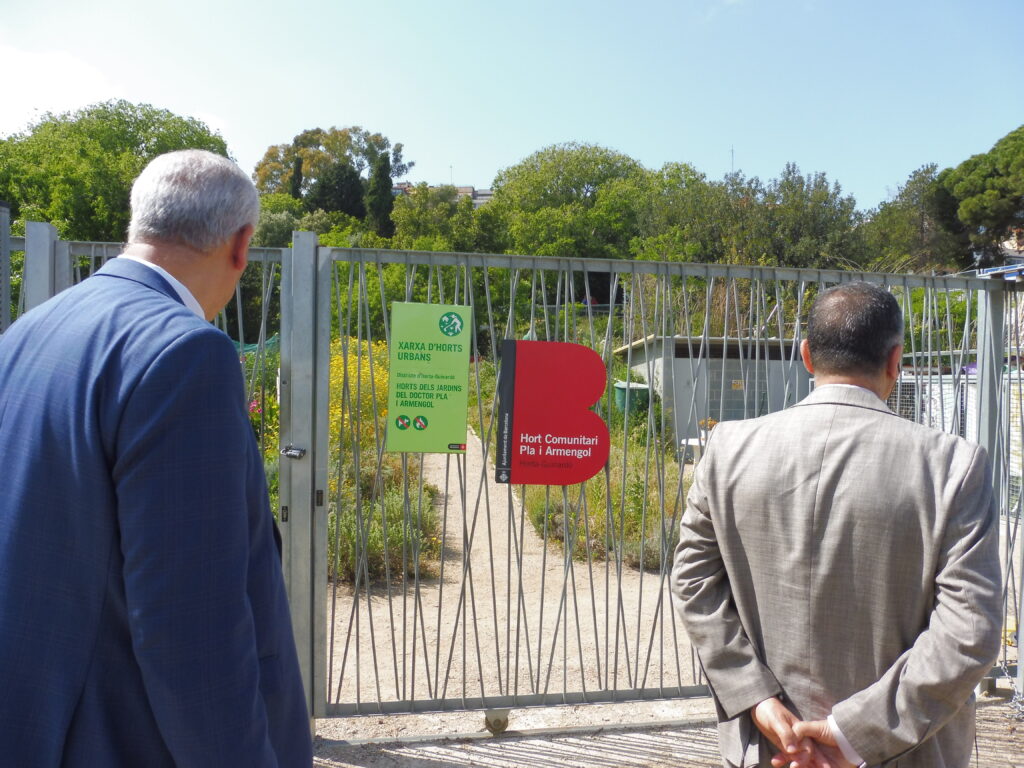
The second visit was led by technical officers from Barcelona City Council’s Parks and Gardens department, who accompanied the group to a park in the Horta-Guinardó District that was transferred from private to public ownership. In addition to being redesigned with a gender perspective, the park was also created to incorporate Mediterranean plant species; therefore, they are adapted to the climate, help to lower the park’s temperature and provide shade, and include areas for rest and play for children. At the same time, it allows for the inclusion of native insect and invertebrate species adapted to the climate, which add diversity to the city and controls pests or the excessive growth of insects organically.
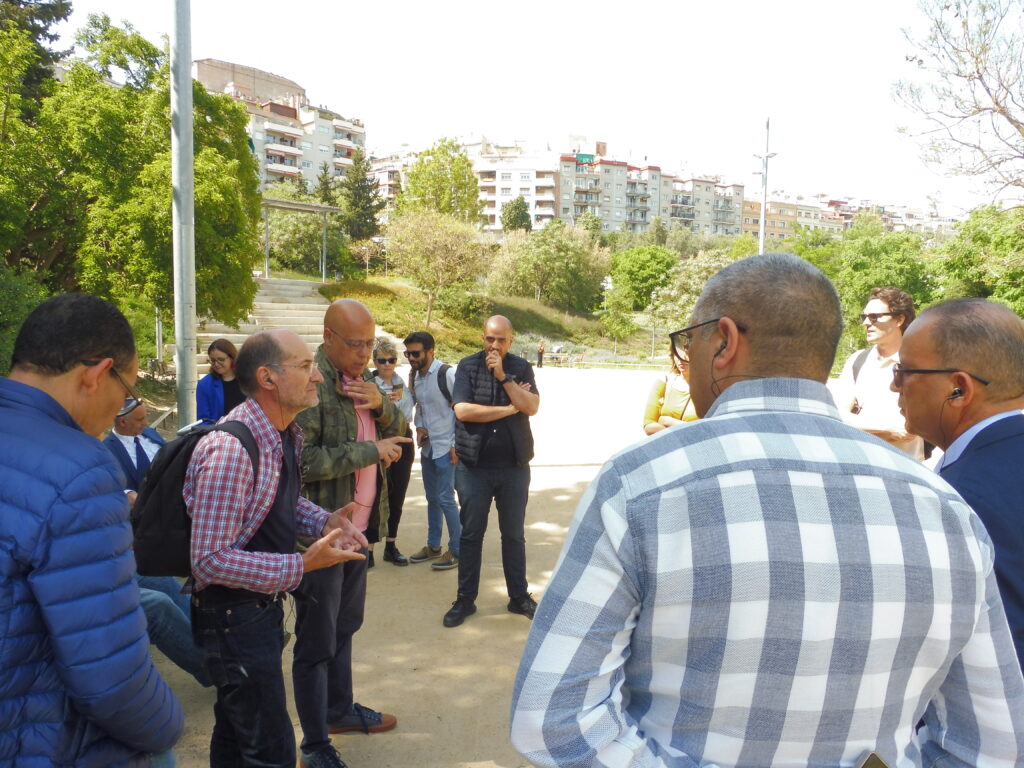
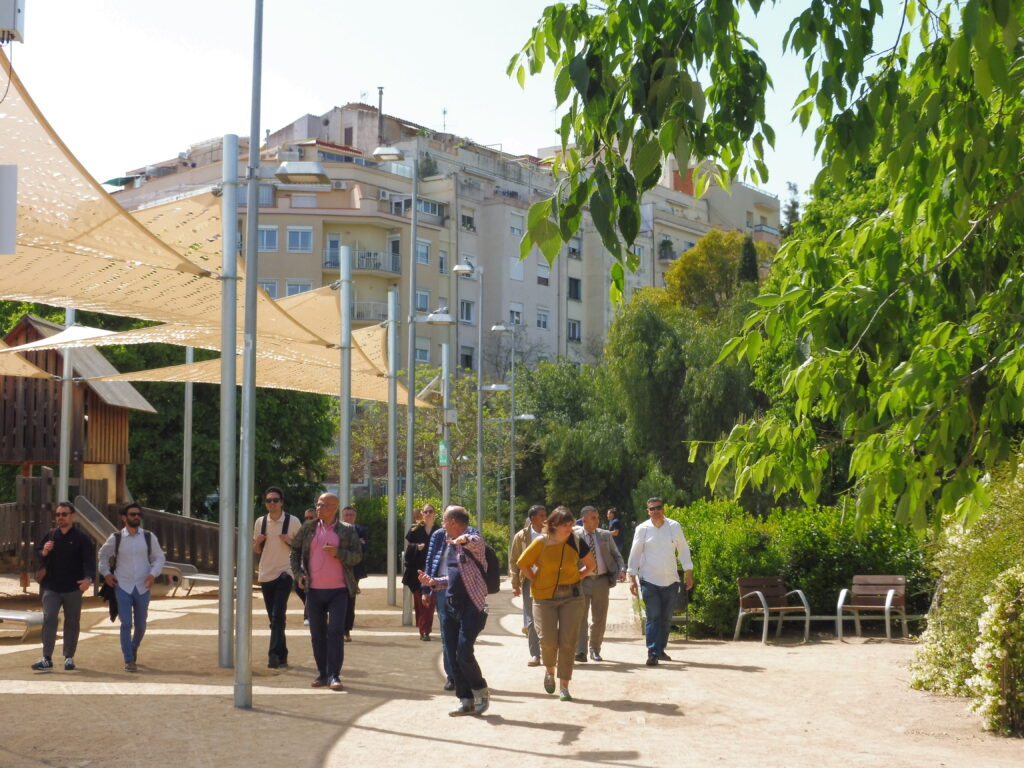
The programme also included a visit to Plaça Sóller, a historic square in the Nou Barris district that was redesigned through a participatory process incorporating residents’ demands and integrating green urbanism from a gender perspective.
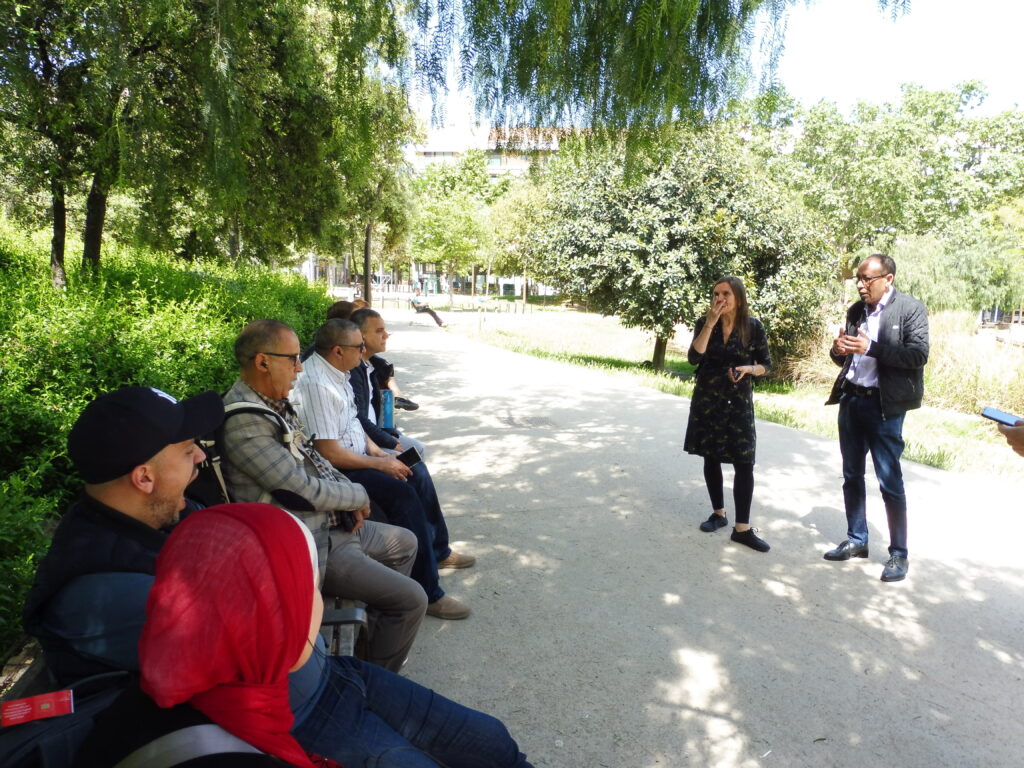
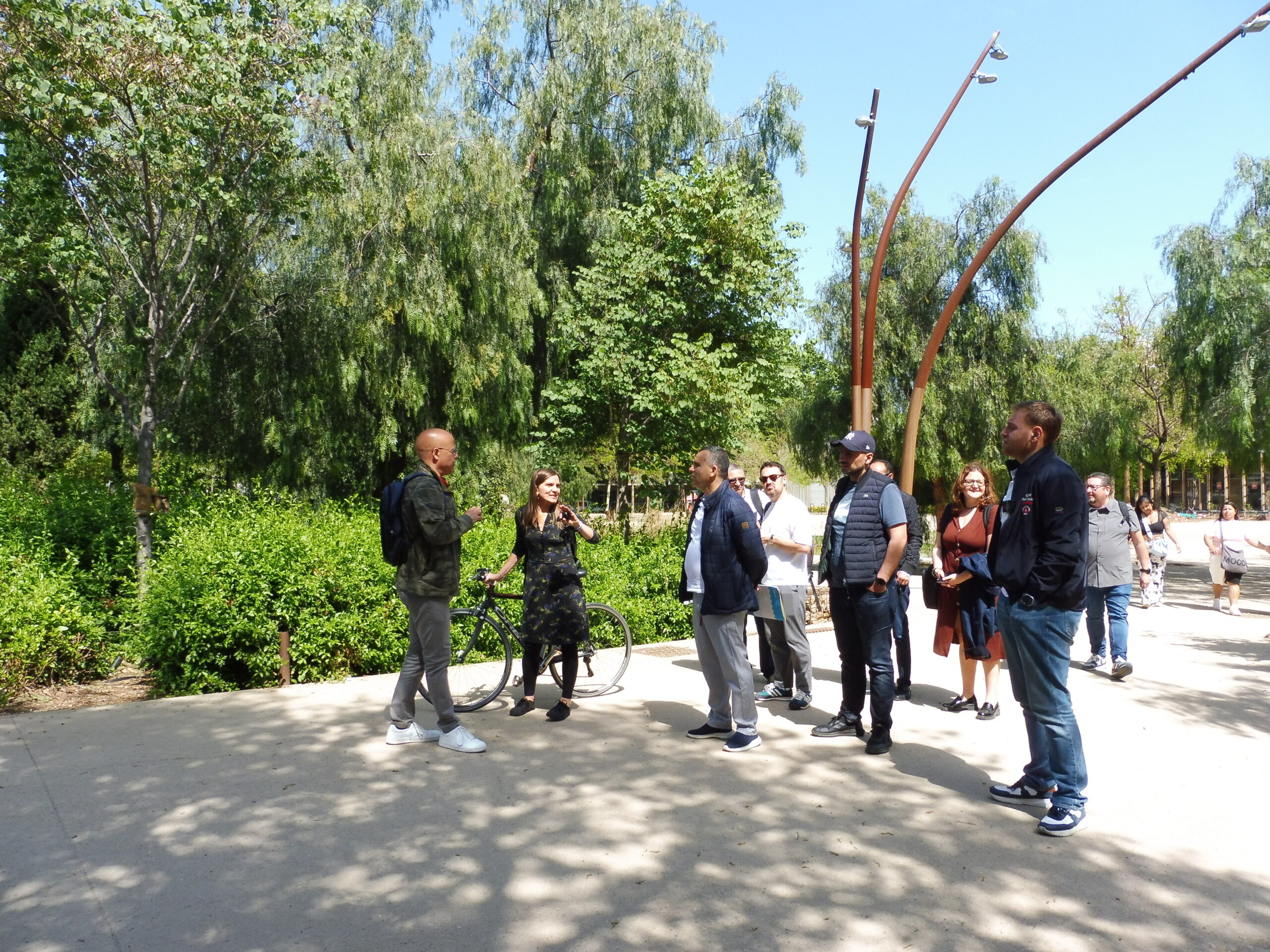
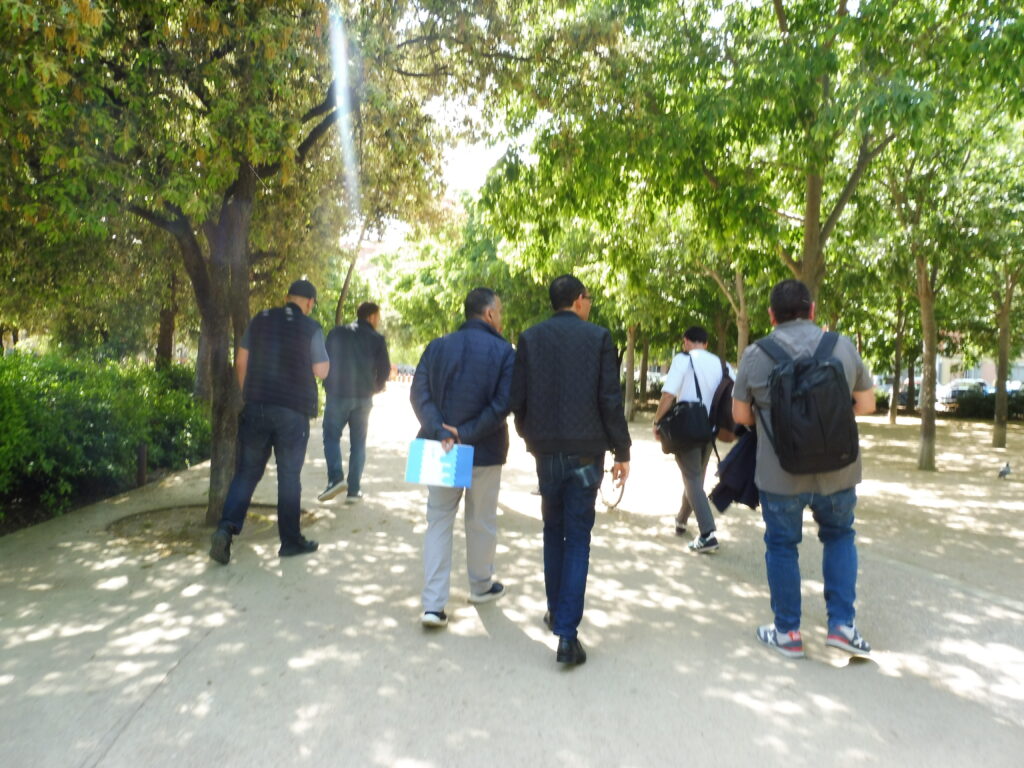
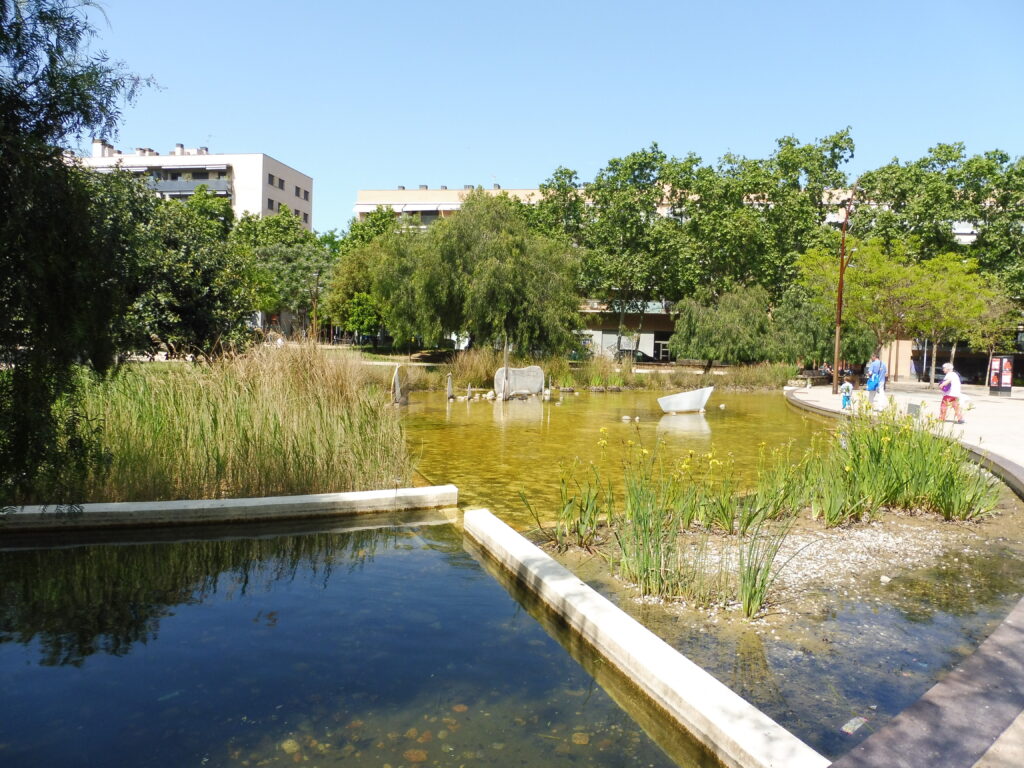
In Mollet del Vallès, participants of the technical visit within the NaturIncmed project explored how a medium-sized municipality applies tactical urbanism and nature-based solutions to expand green infrastructure. The city’s approach includes pilot interventions, water management strategies, and the “3-30-300” principle, which promotes equitable access to urban greenery.
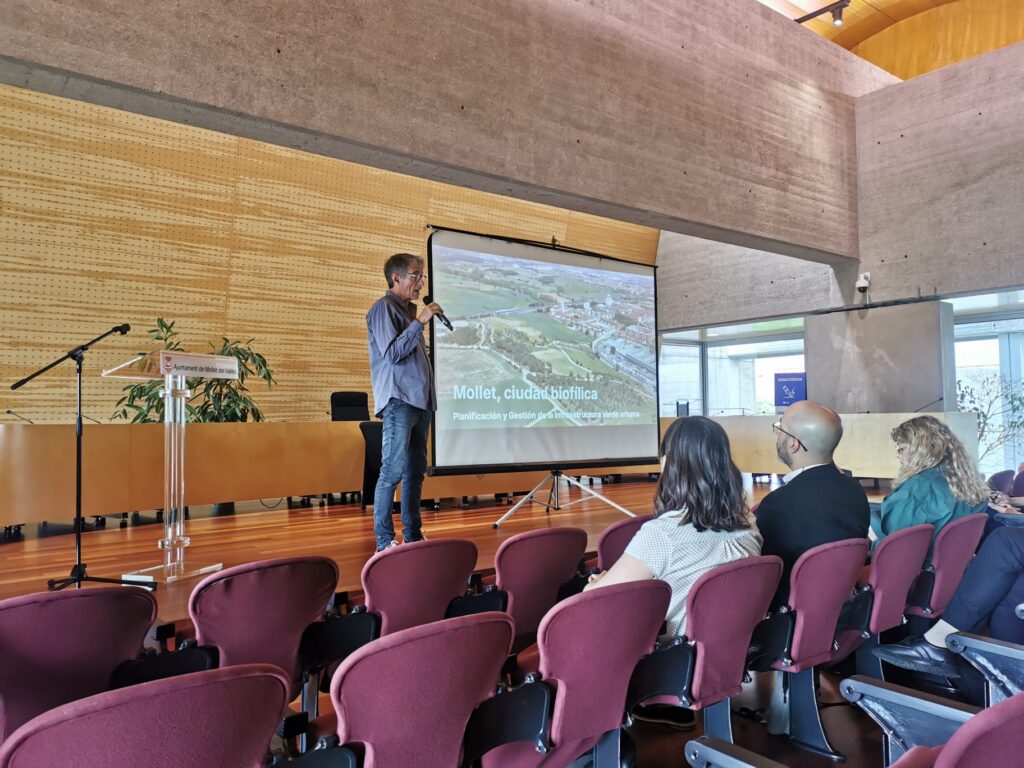
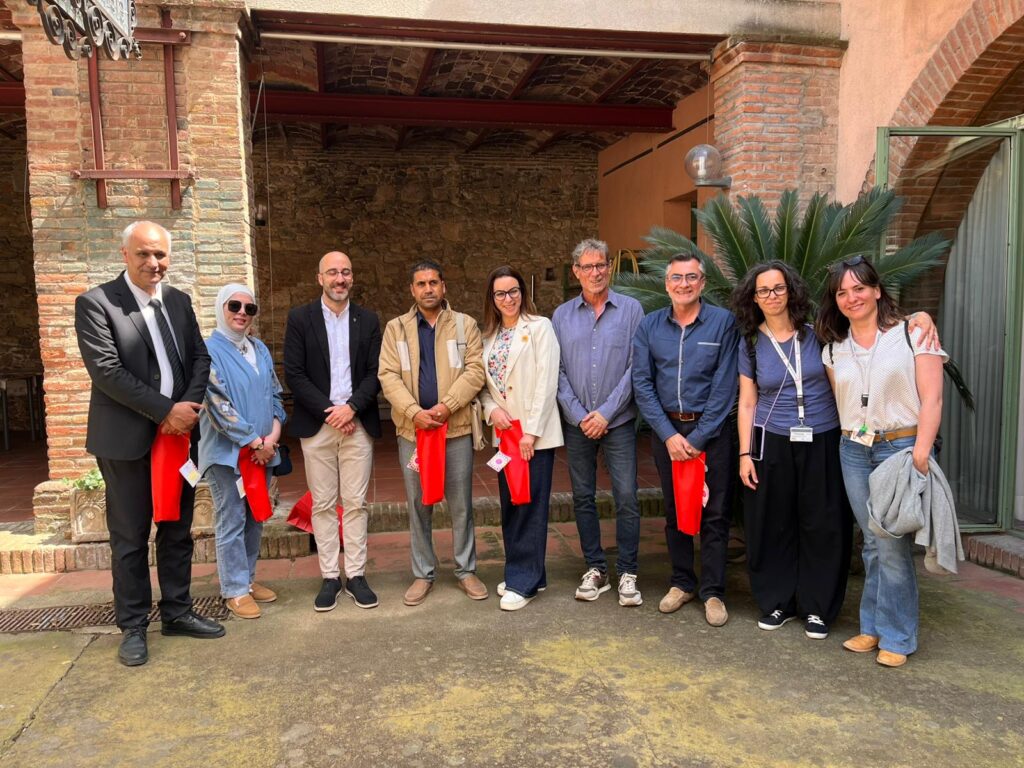
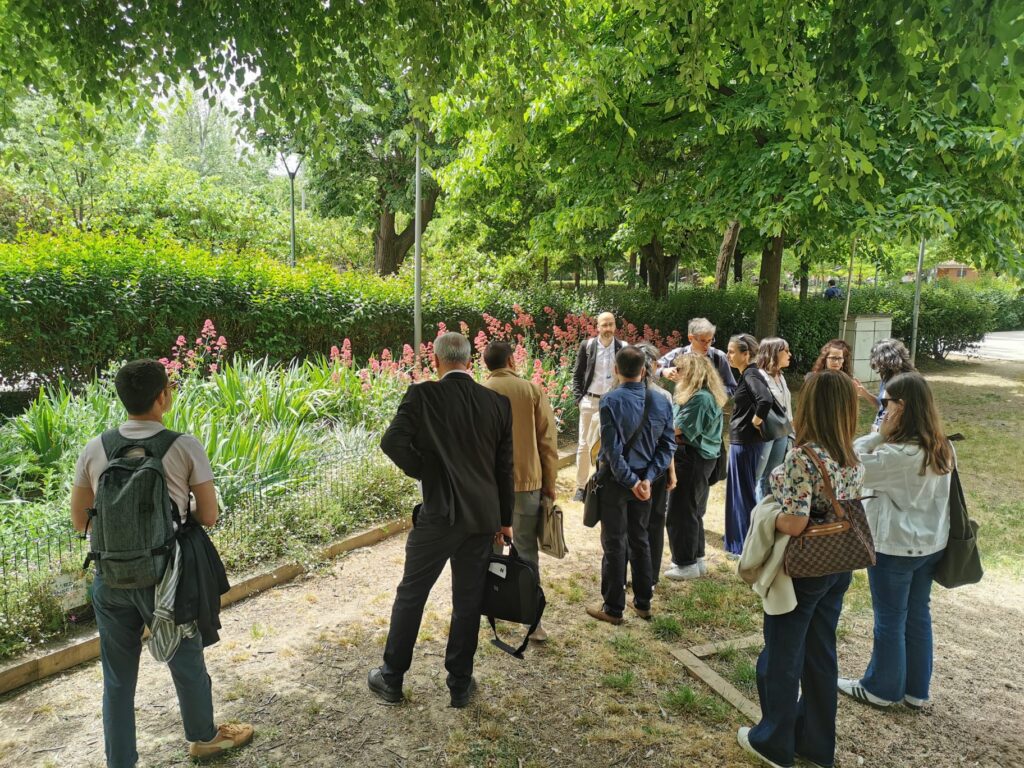
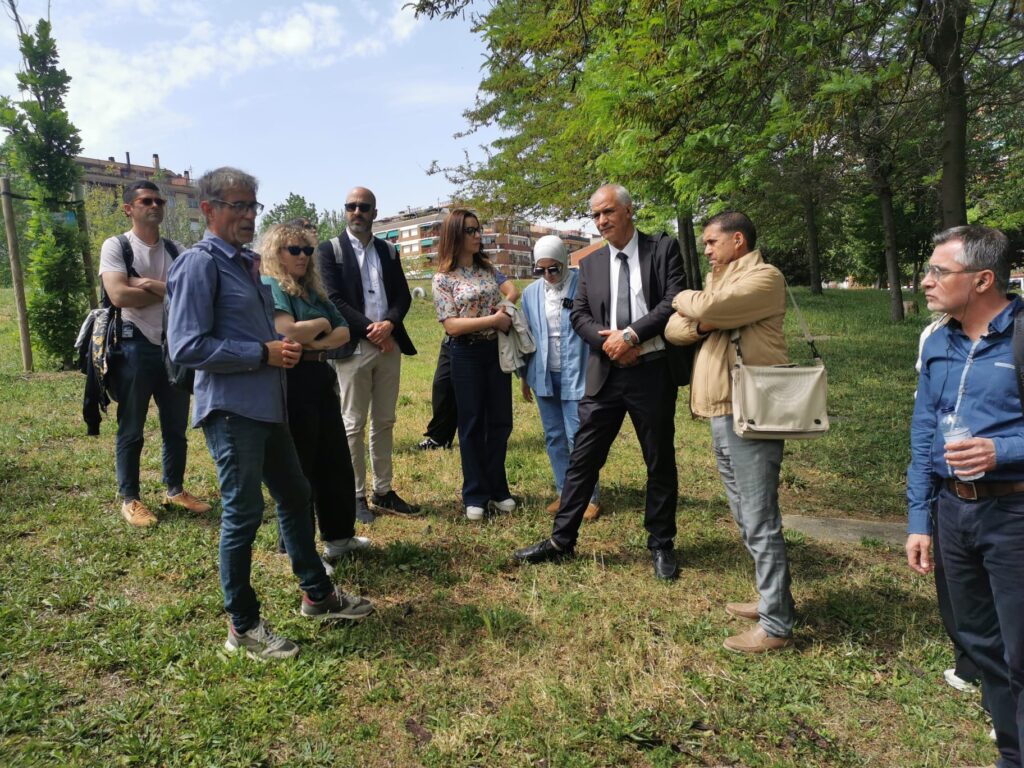
These visits highlighted the importance of adaptability and context-specific solutions. As one participant noted, “We may share similar challenges, but each city must adapt solutions to its own realities.”
The city cast light on its strategic approach to urban planning, combining sustainability with practical maintenance solutions.
Particular attention was given to how a medium-small municipality within the Barcelona Provincial Council framework can achieve high-quality green infrastructure.
The final day continued with a rich exchange of experiences among the participating sharing challenges and lessons learned in implementing gender-sensitive policies, infrastructure projects and the importance of nature-based solutions.
This was followed by the presentation of the URWAN project outputs, focused on sustainable water management through nature-based solutions.
The discussions highlighted the importance of adaptability and local context in project implementation.
Finally, MedCities and Mollet city council representative conducted a field visit across several green corridors and public spaces in the city.
These site visits allowed participants to directly observe how planning translates into tangible, livable urban environments.
Strengthening Mediterranean Cooperation
Beyond technical knowledge, the study visit reinforced the value of city-to-city cooperation. Participants emphasised the importance of networks such as MedCities in facilitating knowledge exchange and fostering long-term collaboration. Cities need spaces for dialogue and mutual learning. This is how they can collectively address shared challenges.
The visit concluded with a shared commitment to continue advancing gender equality, social inclusion, and environmental sustainability in urban planning across the Mediterranean region.
First day presentations can be found here:
Second day presentations can be found here:
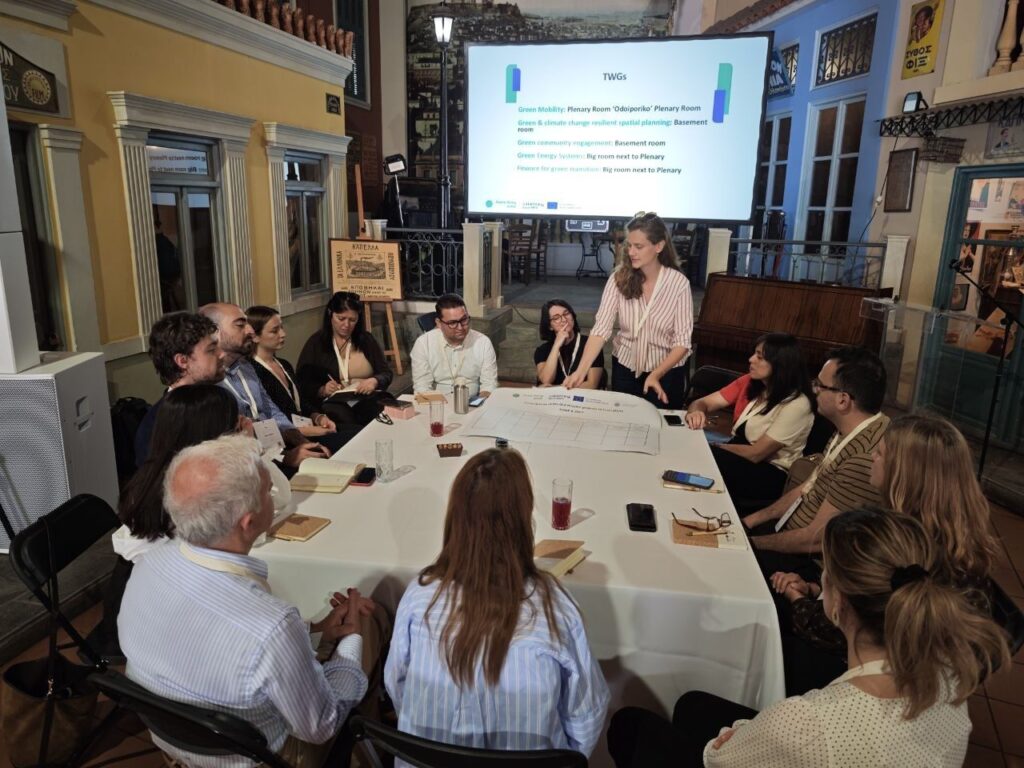
Participants also engaged in thematic working groups aimed at enhancing collaboration among the 25 projects and exploring how to transfer successful solutions to other Mediterranean regions...
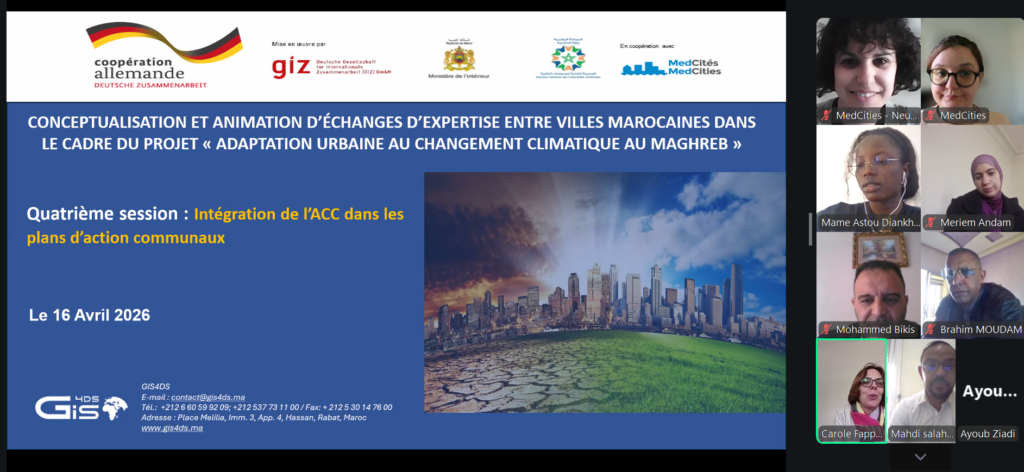
This final meeting was devoted to the operational integration of climate change adaptation into municipal planning, with a particular focus on methodologies, lessons learned, and mechanisms for cooperation between local authorities...
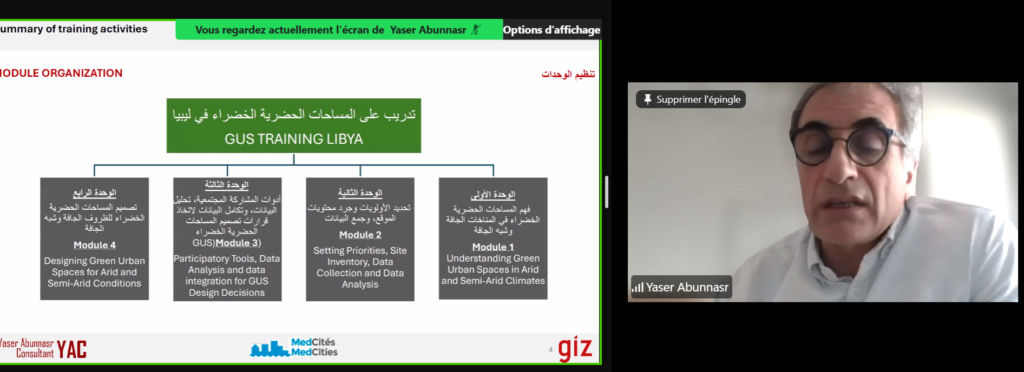
The session also included reflections from Libyan participating municipalities, who shared their experiences, challenges and lessons learned throughout the process...
Suscríbete a nuestro boletín mensual para recibir todas las noticias.
Nam porttitor blandit accumsan. Ut vel dictum sem, a pretium dui. In malesuada enim in dolor euismod
Nam porttitor blandit accumsan. Ut vel dictum sem, a pretium dui. In malesuada enim in dolor euismod

Nam porttitor blandit accumsan. Ut vel dictum sem, a pretium dui. In malesuada enim in dolor euismod

Nam porttitor blandit accumsan. Ut vel dictum sem, a pretium dui. In malesuada enim in dolor euismod
Nam porttitor blandit accumsan. Ut vel dictum sem, a pretium dui. In malesuada enim in dolor euismod

Nam porttitor blandit accumsan. Ut vel dictum sem, a pretium dui. In malesuada enim in dolor euismod